Deborah McColloch, Director: 1234 Market St., 17th Floor, Philadelphia, PA 19107
  facebook   tweet

Neighborhood Stabilization Program (NSP)

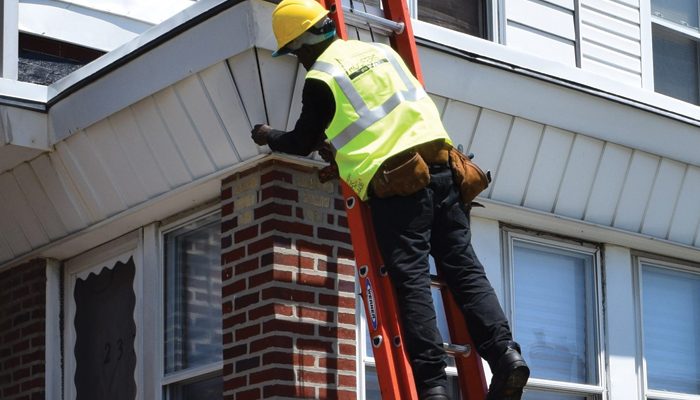
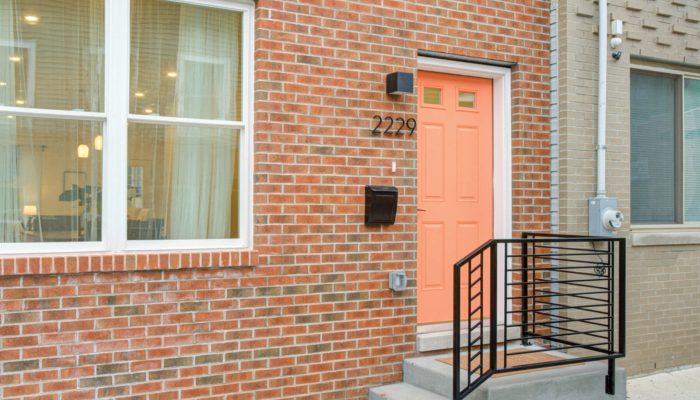
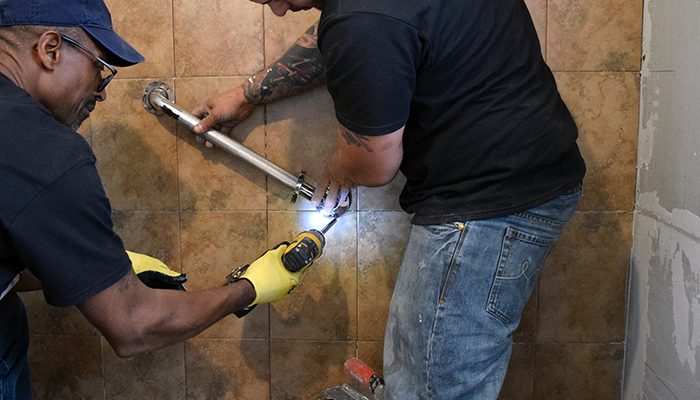
On July 20, Mayor Michael A. Nutter visited 623 N. 56th Street in West Philadelphia, one of the 44 vacant or foreclosed homes from across the City rehabilitated with Federal stimulus dollars. The City of Philadelphia received $16.8 million for the Neighborhood Stabilization Program (NSP) from the U.S. Department of Housing and Urban Development and an additional $3.75 million from the Commonwealth
of Pennsylvania’s Department of Community and Economic Development. The program is administrated by the Philadelphia Redevelopment Authority (PRA). Philadelphia’s NSP focuses on neighborhoods selected by the City’s Office of Housing and Community Development (OHCD) based on historic foreclosure data, indications of predatory lending and the impact of vacant foreclosures on the value of residences in the surrounding neighborhoods.

“The Neighborhood Stabilization Program is improving the quality of life in Philadelphia’s communities while creating valuable job opportunities,” said Mayor Nutter. “These properties are a tangible example of stimulus dollars at work in Philadelphia, and through the NSP initiative, the number of foreclosures in Philadelphia has been reduced.”

The PRA acquired the property at 623 N. 56th Street from Wells Fargo on October 2, 2009 and renovations commenced on November 3, 2009 by the developer Philadelphia Neighborhood Housing Services (PNHS). PNHS has been an active developer in NSP since July 1, 2009 and currently has six properties in development. The renovations were completed on July 16, 2010 by contractor PMH Enterprises, a family-run, minority-owned business founded in 2007. Completed NSP properties are available for purchase at fair market value by individuals who do not have an income exceeding 120% of the area median income; the income limit is $65,750 for a single person and $93,950 for a household of four. Eligible buyers must also occupy the property as their primary residence.

“The Neighborhood Stimulus Program is the product of President Obama’s foresight for neighborhood revitalization, block by block, and his strategy to provide dignified work for Philadelphians, job by job. This program is essential to the sustainability and development of Philadelphia communities,” said Councilman Curtis Jones, Jr. “Citizens cherish where they reside, and it is imperative that those of us who provide the direction of funding place resources in neighborhood enhancement, where it can be promptly utilized and appreciated.”

“PNHS is proud to be associated with the Neighborhood Stabilization Program. Our mission is to preserve and revitalize targeted neighborhoods in the City of Philadelphia. The NSP program provides us with a valuable tool in our efforts to achieve our objectives block-by-block,” said Bernard Hawkins, Executive Director the PNHS. “By renovating foreclosed, abandoned dilapidated eyesore properties, PNHS is able to preserve the structural integrity of the neighborhood while providing quality, affordable homeownership opportunities to low and moderate income families.”

The NSP program hopes to accomplish four important goals:

  • Reduce Blight: Every time a house is rehabbed, NSP eliminates a blighted property in a neighborhood, preventing further neighborhood deterioration. Research by the Wharton School has found that a single blighted property decreases the value of each surrounding property by more than $3,000;
  • Provide Jobs: The Program provides construction jobs for workers who are hired by the developer – providing much-needed employment in a slow economy;
  • Improve the Accessibility of the Housing Stock: NSP provides a homeowner with a renovated home in a neighborhood of their choice; and
  • Sustain Small Business: The program provides a $20,000 developer fee to the CDC or the developer in charge of the project – giving them an extra source of operating income during this recession.

For more information on the house, please contact PNHS at 215-476-4205 or visit www.phillynhs.org/propertyrehab.htm

Summary: Neighborhood Stabilization Program 2 (NSP2)
The City of Philadelphia’s Office of Housing and Community Development (OHCD) has been awarded $43.9 million in Recovery Act funding to stabilize neighborhoods with high levels of foreclosure, vacant housing and blight. The award is from the U.S. Department of Housing and Urban Development’s Neighborhood Stabilization Program (NSP) and is funded through the American Recovery and Reinvestment Act of 2009. These funds are commonly referred to as NSP2 funds.

The purpose of the NSP is to assist in addressing the effects of abandoned and foreclosed properties in the nation’s communities. NSP2 funds were made available to the City through a competitive application process. HUD provided strict requirements that define eligible activities and limit the geographic areas in which NSP2 funds may be used. A summary of the City’s application for NSP2 funds follows.
Click here to view the NSP2 Application as a .pdf file.

Summary of the City’s NSP2 Application
The City requested funding from the Department of Housing and Urban Development for a coordinated approach to market transformation set within the context of a broader array of planned activities. Roughly one-third of the City of Philadelphia meets HUD’s qualifying criteria for eligibility under NSP2.

The approach represents an attempt to build on the strengths of some Philadelphia neighborhoods and institutions through strategic investments, and to expand those successful neighborhoods into adjacent areas that have been left behind over the last 15 years. Rather than spreading out investments, this approach selects the neighborhoods that meet certain criteria and concentrates investments in a way that can serve as a catalyst for revitalization. This approach has already worked in neighborhoods as varied as West Poplar (Nehemiah Homes), Eastern North Philadelphia (Pradera Homes), and south Center City (MLK Hope VI). For example, in Eastern North Philadelphia, 10 years of focused investment in affordable homeownership and rental housing has led to a tripling of property values.

A critical component of this approach is comprehensive planning by the City of Philadelphia, with all City agencies following the same plan. In the past, the Commerce Department and OHCD did not always target their investments in the same neighborhoods. Other City departments – Water, Fairmount Park and the Philadelphia Redevelopment Authority – often acted autonomously as well. This changed in 2008 when Mayor Michael Nutter took office and began to implement a more coordinated approach to neighborhood planning and investment. The centerpiece of that approach is a revitalized Planning Commission that now must review all neighborhood plans and has begun to develop new planning and zoning criteria that will institutionalize those mandates.

The City will focus the activities under this program in two sets of census tracts. The first, which includes the larger number of tracts, is where foreclosure activity, as measured both by risk scores and recent bank-owned real estate inventory, is high and vacancy is relatively low. The second is a smaller number of census tracts in which vacancy is high but there is significant adjacent market strength and additional ongoing investment that will support redevelopment. The application concentrates resources in a way that can show a measurable impact in stabilizing neighborhoods and improving housing markets. In selecting NSP2 census tracts, the City also considered transportation infrastructure, anchor institutions, economic opportunities, community assets and existing programs that together provide a strong foundation upon which to stabilize the housing market.

The following activities are proposed to effectively address and stabilize market conditions in Philadelphia’s proposed target neighborhoods.

Homebuyer Incentives Coupled with Housing Counseling
The City will use NSP2 funds to assist income-eligible first-time homebuyers to address the issue of cash required to purchase foreclosed upon homes in the targeted areas. The City will offer “soft second” loans for up to $25,000 to cover downpayment and closing costs, as well as an allowance for code compliance, lead-based paint abatement, and energy efficiency improvements. The home buyer will be required to provide at least 3.5 percent of the purchase price and to receive pre-purchase counseling offered by a HUD-approved housing counseling agency.

Loan Loss Reserves For Construction Financing
The City proposes to work with the National Community Stabilization Trust to establish a loan loss reserve fund for financing construction loans for affordable housing development in targeted NSP2-eligible neighborhoods. The fund will support construction financing for affordable housing development (rehabilitation or new construction) of key homeownership or rental projects of sufficient scale or importance to affect the local housing market positively.

Acquisition and Renovation of Vacant, Foreclosed Homes
Vacant homes, either long-term vacant structures already owned by the City or foreclosed property owned by lenders, will be renovated and resold under this component of the program, under similar terms to the work already underway through NSP. Average subsidy levels will be roughly $75,000. Developers, both for-profit and nonprofit, will receive a developers’ fee for their services upon sale of the property to an income-eligible buyer.

Purchase, Rehabilitation and Re-Use of Foreclosed Upon Structures as Multifamily Housing
Vacant or occupied multifamily structures that are in need of substantial rehabilitation and are facing foreclosure will be acquired and redeveloped under this component of the program. The City has identified a number of older affordable housing developments in need of substantial investment if they are to continue to operate. Eligible properties must be located within the proposed target area to be eligible for funding.

Redevelopment of Vacant Land as Housing
In one or more neighborhoods, the City will complete the assembly of land and finance the development of three large-scale affordable housing developments. At least one of these developments will be for homeownership targeted to families with incomes up to 120 percent of the Area Median Income.

Demolition of Vacant, Blighted Structures
The City proposes to demolish long term vacant and blighted structures that impede redevelopment. Specifically, this effort will focus on vacant commercial and industrial properties that are no longer economically viable or supported by current redevelopment plans. Vacant and blighted housing may also be demolished as part of this effort.

Most activities will be carried out by the Redevelopment Authority, under contract to the Office of Housing and Community Development. The PRA will underwrite and fund housing development activities through nonprofit and for-profit developers. Housing Counseling agencies will provide counseling in the homebuyer incentive program. The Department of Licenses and Inspections will carry out approved demolition activities.

This broad range of activities reflects the unique conditions that have developed recently as the current foreclosure and financing crisis have further weakened Philadelphia’s long-term market conditions. These activities will be deployed in a targeted fashion to address the market conditions in each of our chosen target areas.

NSP2 Target Areas in Philadelphia, PA

NSP target areas are defined by the following census tracts:
20, 21, 31, 32, 55, 60, 98, 108, 109, 114, 115, 118, 119, 156, 162, 163, 180, 191, 204, 205, 244, 247, 248, 249, 250, 259, 260, 262, 263.01, 263.02, 264, 265, 266, 267, 268, 274, 275, 276, 277, 279, 280, 282, 283, 284, 286, 300, 302, 303, 305, 311, 314, 315, 320, 326, 330

Click here for the NSP2 Application submitted to HUD


Neighborhood Stabilization Program (NSP)


The City will use its NSP funding to acquire, rehabilitate and reuse as housing properties which have been foreclosed upon. As required by statute, the City will target funds to the areas of greatest need, including those with the greatest percentage of home foreclosures, the highest percentage of homes financed by a subprime loan and those identified as likely to face a significant rise in the rate of home foreclosures.

To view the NSP Application in English click here Resumen de la Solicitud NSP en Español click here

Policy - Planning Housing - Programs Acquisition/Disposition City Initiatives Financials

Consolidated Plan

Housing Counseling

Housing Resource Guide

Legal Notices

Press Releases

RFPs

Reports

Affordable Housing

Homeownership Programs

Home Repair Programs

Homes for Sale

Income Guidelines

Rental Housing

Special-Needs

Acquisition

Online Property Info

Vacancy/Disposition

Contact Us/FAQs

Link to PHDC website

Link to PRA website

Foreclosure Prevention

Avoid Foreclosure Scams

Anti-Predatory Lending

Housing Trust Fund

NACs

NSP

PHIL Loan

Elm Street Program

Homeownership Rehab

Auditing

HUD

Job Openings

PHFA

Tax Abatement

Open Records Policy
©2013 OHCD all rights reserved: click here for Terms of Use

It is the policy of the City of Philadelphia to provide services without regard to race, color, religion, sex, sexual orientation, having AIDS or being perceived to have AIDS, national origin, ancestry, physical handicap or age.

Site Design Tiger Productions