What is a green job?
A green job contributes directly to preserving or enhancing our environment. Designing and installing solar panels, weatherizing existing buildings and designing new energy efficient ones, retrofitting vehicles with special equipment to reduce emissions, landscaping and local food production are all examples of green jobs. Some green jobs are new occupations, while others are existing jobs that require new skills. SEPTA considers all of its workers to have green jobs because what they do helps protect the environment
So what do green jobs mean for the middle class?
First, it means more jobs. At a time when good jobs at living wages are harder and harder to come by, it is critical we find new and innovative ways to create more local jobs that cannot be outsourced. Building a new power grid, manufacturing solar panels, weatherizing homes and office buildings, and renovating schools are just a few examples of ways to create new good quality jobs with a bright future.
Second, more green jobs mean more money in your pocket at the end of the month. If we create jobs that reduce your energy costs – like your electric and heating bills – you have more income available for other things.
Creating green jobs has multiple benefits. It helps the economy as a whole; it helps our environment; and it will save you money.
Energy conservation also helps lower the price of energy. With rising energy prices affecting every household’s budgets, lowering demand for energy is one sure way to keep the lid on runaway price increases.
Can you get me a green job?
The City of Philadelphia promotes green jobs and is working to grow the regional green economy, but the City does not currently offer a job bank service. We encourage you to think through your skills and think about what the next step you might take to become a part of the growing green economy.
What is weatherization?
Weatherization is the process of modifying a building to reduce its energy consumption and save money. Weatherization can include air-sealing installing insulation, replacing heating and air conditioning equipment, replacing inefficient lighting and appliances and installing a reflective white roof. It also includes educating the building occupants to practice more energy conscious behavior.
I want my home weatherized or I want green energy upgrades.
If you would like your home to be weatherized please contact the Philadelphia Housing Development Corporation by calling 215.448.3000 or at
http://www.phdchousing.org/
The Redevelopment Authority administers a program that provides low-interest loans of 3%-5% for renovations (including energy renovations) in owner-occupied homes in the city. More information available at http://www.philaloan.com/
For solar energy upgrades the Pennsylvania Sunshine Program will soon be giving out up to $2,000 in grant funding for residential and business solar upgrades.
http://www.depweb.state.pa.us/energindependent/cwp/view.asp?a=3&q=545926
The NC Solar Center and the Interstate Renewable Energy Council maintain a database of incentives available for renewables & energy efficiency at http://www.dsireusa.org
I want to gain skills for a green job.
For basic green jobs training you can contact the Energy Coordinating Agency (ECA) a local nonprofit that offering a variety of green job trainings. A listing of trainings events and job opportunities is available at www.energywisepa.org
You can find more information about ECA’s green jobs training by going to http://www.ecasavesenergy.org/training.html or calling 215.988.0929.
For continuing education opportunities that focus on green techniques for building professionals (e.g. LEED certification) The Delaware Valley Green Building Council offers educational trainings and events. You can find a listing of their events at: http://www.dvgbc.org/education-events
In addition do not forget that the skills for a green job share many of the skills of other jobs, so pursuing further education is always recommended. The following groups can help you pursue further education opportunities:
Philadelphia Workforce Development Corporation– The Philadelphia Workforce Development Corporation partners with the Pennsylvania CareerLink program which offers a “one-stop” network for employers and those seeking jobs, PA CareerLink provides funding support for skill training and education to eligible job seekers. PA CareerLink has six locations in Philadelphia. You can contact them by phone at (215) 557-2625 or on the Internet at: http://www.pwdc.org
Graduate! Philadelphia – Is a program that provides support and guidance to adults that would like to return to college. http://www.graduatephiladelphia.org
Community College of Philadelphia – CCP offers classes and programs to help you gain skills that are valuable on the job market. Their Opportunity Now program offers a free semester of tuition to laid-off workers and their My Degree Now program offers qualified individuals who have already completed 30 credits an opportunity to complete their degree debt-free.
I have skills and want to find a job.
Two starting points for a green job search are:
http://www.sbnphiladelphia.org/ - The Greater Philadelphia Sustainable Business Network is a nonprofit network with the mission of building a more sustainable economy. Their membership list and events are a great place to begin tapping into the network of the area green economy. For example on May 11th , 2009 the SBN is hosting a “Recovery 101” event aimed at connecting local small and green businesses to opportunities in the Federal Recover package.
http://www.energywisepa.org – This website is a project of the Energy Coordinating Agency and has a statewide green job listing
You can also stop by your Philadelphia Workforce Development Corporation/PA CareerLink “One-Stop” center which connects employees to employers in the wider economy. PA CareerLink has six locations in Philadelphia. You can contact them by phone at (215) 557-2625 or on the Internet at: http://www.pwdc.org
I am a contractor and am interested in working with Philadelphia City Government.
If you are a contractor the Commerce Department should be your first stop to find help in pursuing City contracts
Please contact them at http://www.phila.gov/commerce/
All City capital projects and professional services capital project are posted on phila.gov e-contracts and are available for bidding. https://ework.phila.gov/econtractphilly/
I would like a job with the City of Philadelphia.
City hiring is handled by the Office of Human Resources.
Please contact them at http://www.phila.gov/personnel/announce/index.html
What is the Mayor’s Office of Sustainability?
Establishing the Mayor’s Office of Sustainability (MOS) was a promise Mayor Michael Nutter made and helping it flourish is one of the goals of his administration. The MOS is helping Philadelphia meet the mayor’s goal of being the “greenest city in the United States of America.”
The office has been overseeing the creation of Greenworks Philadelphia and will help manage its implementation. Greenworks Philadelphia a city-wide plan to reduce our vulnerability to rising energy costs, limit our environmental footprint and prepare our workforce for a competitive role in the emerging green economy. As Mayor Nutter in January told the House of Representatives Select Committee on Energy Independence and Global Warming, the whole effort could be described as “strengthening our economy by reducing our environmental impact.”
Why does the city need an entire office dedicated to greening?
Making our city more sustainable is essential to our future prosperity and quality of life for all Philadelphians. Sustainability is fundamental to our economy, our environment, and our future.
We face enormous challenges. Energy prices are rapidly rising, creating financial and social problems not just for our low income citizens, but for all of us. Energy savings is the largest potential source of new revenue for city government, businesses and households alike. Green collar jobs in the clean energy industry, in recycling, and in sustainable food production and other related areas will be one of the largest areas of job growth in the next decade.
Green is an economic engine: hundreds of Philadelphians will be put to work installing rooftop solar panels, weatherizing existing structures, and possibly even manufacturing sustainable building products and renewable energy technologies. The John S. and James L. Knight Green Jobs Training Center is opening in 2010. And to give workers the skills they need to retrofit buildings, a city-wide green jobs apprenticeship program is being designed by the Sustainable Business Network of Great Philadelphia. With money from the American Recovery and Reinvestment Act of 2009, 800 people will find work making thousands of houses more energy efficient. Lower electrical and gas costs will put money in people’s pockets.
A city that is literally “greener” – with more trees and plants – is a more attractive city for everyone who works or lives here. When the government saves money by cutting its energy costs or increasing recycling, taxpayers save money.
Green is also a health issue. Clearing the air – by planting trees or having fewer cars on the road – means easier breathing. Among MOS’s goals is to bring shops selling fresh, affordable food within a 10-minute walk of all city residents, and park and recreation resources within a 10-minute walk of 75 percent of all residents. Healthier food and more exercise is another way to keep residents in good health, as well as possibly lowering insurance and health care costs.
What is LEED?
Leadership in Energy and Environmental Design (LEED) is the sustainable building rating system developed by the US Green Building Council. To be LEED certified, a structure must meet specific standards of site development, water savings, energy efficiency, materials selection, indoor environmental quality and other criteria.
What do they mean when they talk about stormwater run off?
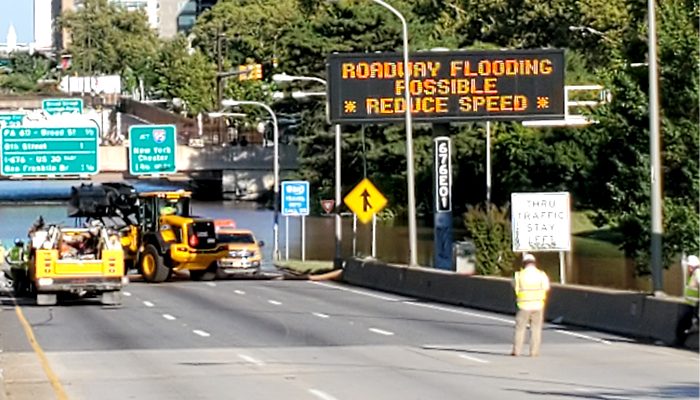
It’s just what it sounds like: water left after a storm, be it rain or from melting snow. Impervious surfaces like driveways, sidewalks, and streets prevent stormwater runoff from naturally soaking into the ground—instead it goes into the sewer pipes. If not adequately controlled, runoff in urban centers causes flooding, erosion, areas of stagnant water and sewer backups that can flood basements.
What are greenhouse gases?
The three primary greenhouse gases that are linked to humans are carbon dioxide, caused by burning fossil fuels like coal, oil, gas and deforestation; methane, emitted by landfills and livestock; and nitrous oxide, emitted by agriculture and burning fossil fuels. These gases accumulate in the atmosphere and trap heat that normally would exit into outer space. This causes global warming, leading to higher average temperatures, more extreme weather incidents like hurricanes, floods, and droughts, and rising sea level.
What does it mean to “retrofit” diesel vehicles?
This means adding something called diesel oxidation catalyst equipment to these trucks, which reduces emissions of particulate matter by at least 20 percent, hydrocarbons by 50 percent and carbon monoxide by 40 percent.
What is biodiesel fuel?
Biodiesel fuel is made from Pennsylvania-grown soy beans and recycled waste grease. It produces 20 percent less carbon monoxide, particulate matter and hydrocarbons.
With Greenworks Philadelphia, will we all be planting grass on our roofs?
Some of us can, if we so choose. In fact, the Free Library’s Central branch already has a green roof. This helps put Philadelphia in second place, behind Chicago, as the city with the highest amount of square footage of green roofs.
Many more of us can coat our roofs white to save electricity, lower the heat island effect and save money. White, reflective roofs are perhaps the best kept secret in Philadelphia. They reduce air conditioning costs approximately 22%, can lower outdoor temperatures during heat waves, and may even save lives by preventing extreme heat build up in homes of elderly or disabled people who cannot afford air conditioning.
In addition, we can plant trees and flowers in our yards or join community gardens and do all of those typically “green” things that first come to mind. According to the Next Great City Coalition, a group composed of 82 civic organizations, every $1 invested in planting trees yields a $2.80 return, as the greenery cuts down on pollution, cools buildings, eases storm water runoff and raises property values.
But it’s much more than that. Living green affects everything we do: we can make a difference by reusing bags when we shop, driving less and using our bikes or public transportation more, turning off unnecessary lights and appliances, and encouraging recycling.
What’s the time line for Greenworks Philadelphia?
The Mayor’s Office of Sustainability plans to achieve all 15 of its targets by 2015.
What will the American Recovery and Reinvestment Act (ARRA) bring to Philadelphia?
Federal stimulus dollars will go to a variety of city projects.
For example, SEPTA will use the money to repair and renovate existing stations, notably the Fox Chase station and two stations on the Broad Street line. It will also upgrade train control computers on the Green Line, eliminating delays that are common and may deter would-be riders.
SEPTA will also purchase 440 hybrid diesel buses over the next three years, replacing 60 percent of its fleet.
The Recovery law also commits an unprecedented amount of money for energy efficiency, weatherization in particular. It also expands the eligibility requirements of the Weatherization Assistance Program of the US Department of Energy. The city would like to retrofit about 15 percent of housing stock with insulation, air sealing, cool roofs and smart meters, with Recovery money being used to fund a portion of this effort.
Using Recovery dollars, the Philadelphia Housing Authority will build 23 LEED-certified homes in West Philadelphia.
What can I do?
Connect with Greenworks Philadelphia! Contact us via our website and become a fan on Facebook and give us your ideas. Let us know how to reach you and we will let you know what we are working on www.greenworksphila.org and search for Philadelphia Office of Sustainability on Facebook.
There are also lots of small changes you can make. The website greenbootcamp.blogspot.com, which has a 52-week program to becoming “a greener you,” offers this easy top 10 list to start greening your lifestyle.
- Use energy-efficient lighting known as compact fluorescent light bulbs (CFL.)
- Install a clock thermostat and set back the temperature in winter when your sleeping and out of the house during the day. If you have central air conditioning, turn the temperature up when you’re asleep and away. It makes a huge difference.
- Embrace daylight. If it’s sunny, do you really need indoor lighting? Turn off your lights.
- Start composting. It’ll reduce your garbage output and help your—or a friend’s – garden.
- Recycle more than just paper and plastic. Old towels and clothes can become cleaning rags or be donated to an animal shelter that uses fabric to line cages. Furniture can be given away on Craig’s List or Freecycle.
- Stock up on reusable bags like those giveaways from conventions or vacations to use when you shop.
- Shop locally. Spring and summer are great times to take advantage of local markets.
- Leave the car at home and make walking a game. Alternatively, park in one central location when you run a variety of errands.
- Dispose of disposables. No more paper plates and plastic cups. Use the real ones you already have.
- Change how you use and drink water. Install aerators on your faucets and low-flow showerheads in your bathrooms. Kick the bottled water habit and use one refillable bottle and save a landfill in the process.