|
Affordable Rental Housing
Neighborhood-Based Rental Production:
In its role as the City of Philadelphia’s housing finance agency and real estate acquisition/disposition agency, RDA has developed a reliable process for delivering CDBG and HOME funds for rental housing production by private, non-profit and CDC developers through a competitive RFP approach.

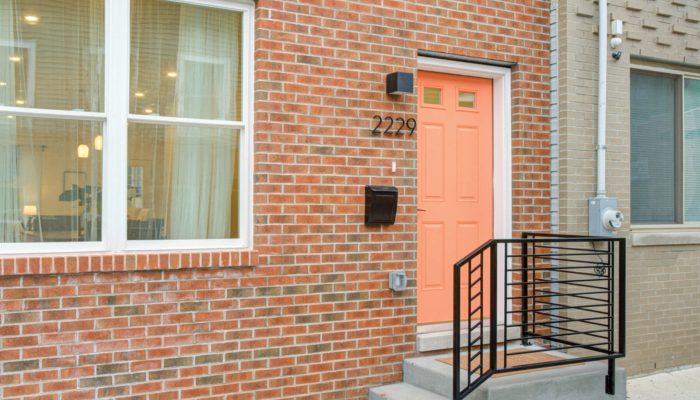
Karen Donnally Townhomes. 32-unit new-construction rental development in the area west of Orianna and Diamond Streets. Sponsored by WCRP, this project received $2.2 million in CDBG and HOME funds for construction.

Since 1993 most tax-credit supported rental housing ventures in Philadelphia have been financed through a combination of CDBG-development subsidy (awarded through the RFP process) combined with Low-Income Housing Tax Credits. RDA underwriting staff has developed a close working relationship with counterparts at PHFA, the state agency that administers tax-credit financing allocated to Pennsylvania. RDA and PHFA staff coordinate their respective reviews of development financing proposals for Philadelphia ventures to ensure that CDBG subsidy funding is used to make Philadelphia proposals as competitive as possible for tax-credit financing. Because of this close working relationship and the capability of many developers of Philadelphia affordable-housing ventures, the City has succeeded in receiving substantial awards of tax-credit financing in every funding cycle since 1993.
Financing for the rehabilitation and new construction of rental projects is provided using CDBG and HOME funds in accordance with the Rental Project Selection Criteria. Project financing for rental ventures is usually made available in the form of a long-term, low- or no-interest loan. Financing administered by OHCD through RDA may leverage PHFA PennHOMES funds and low-income housing tax credits, and in some cases, foundation funding.
In order to promote transitional and permanent housing for special-needs populations, projects recommended to receive financing must allocate 20 percent of the developed units for special-needs housing. Also, in order to ensure the most efficient use of funds, OHCD requires any project which does not achieve settlement within six months to undergo a RDA staff review. Following RDA review, OHCD may withdraw project funding, extend its commitment or have a different development entity undertake the construction to ensure project completion.
Development Financing/Homeless and
Special-Needs Housing:
OHCD maintains its commitment for the development of permanent housing for the following Philadelphia residents:
- the homeless;
- persons with substance abuse;
- mentally ill and mentally disabled persons;
- persons with AIDS; and
- disabled persons.
In Year 31 OHCD provided development financing to projects selected through a competitive process. An RFP was issued by RDA in December 2004 to provide development financing for projects serving special-needs populations. Sponsors and/or developers were required to demonstrate development capacity and capability to leverage city funds with state and/or federal special-purpose funds and private funds. Priority was given to those projects which in addition to leveraging other funding, can provide needed supportive service resources, require additional OHCD financing to address gaps which cannot be eliminated by other sources, support other City revitalization efforts and/or are a continuation of a multiphased project.
Development Financing/AIDS-Related Housing:
The RDA’s special-needs housing development request for proposals issued in December 2004 included HIV/AIDS housing development. Up to $700,000 in HOPWA funding was made available under this RFP in Year 31.
Housing Development Assistance:
OHCD supports rental developments which receive other federal funding through the Housing Development Assistance budget. In general, the program provides funding for site improvements and related construction activities. For rental development with commitments of HUD 202 (elderly) or HUD 811 (disabled) financing, the OHCD subsidy is capped at $15,000 per unit, based upon a dollar-for-dollar match of other funds, provided funds are available.
|