Vaccines have done an incredible job to prevent disease in the U.S. and throughout the world. We see far fewer cases of diseases like diphtheria, measles, and polio that used to be quite common. This is why it is so important to make sure people continue to get immunizations to prevent these diseases, so that they don't infect large numbers of people again.
Many of the diseases that vaccines prevent are still common in other countries. Global travel means that disease can move much more easily from place to place. Getting yourself and your family immunized on time is the best protection!
The vaccine schedules for children, teens and adults are based on how vaccines work best. The schedules are reviewed each year and are approved by the American Academy of Pediatrics, the Centers for Disease Control, and the American Academy of Family Physicians.
Vaccines need to be given at the right age at with the right amount of time between doses to make sure they work. There is no evidence that delaying or spacing out immunizations using an "alternative" schedule is safer or protects children better than following the recommended immunization schedule.
In fact, delaying immunizations means your baby goes for a longer time without protection from serious diseases. Not getting all of the immunizations that are recommended at a doctor's visit also means that parents will need to make more trips to the doctor to get those immunizations they need.
Sometimes, a child has commercial (private) health insurance that either:
These children are called "underinsured" for vaccines. Underinsured children in Philadelphia are eligible for VFC vaccines, but they must go to one of Philadelphia's Federally Qualified Health Centers (FQHC).
Children whose health insurance covers the total cost of immunizations are not eligible for VFC vaccines. This is true even when a child's insurance company will not pay out a claim for the cost of the vaccine and administration fees because the plan's deductible has not yet been reached.
What about children enrolled in (S)CHIP?
In Pennsylvania, children enrolled in the Children's Health Insurance Program are considered to be privately insured, which means they are not eligible for VFC vaccines.
If your child is eligible for VFC, the doctor's office cannot charge you for the cost of the vaccine. If your child is eligible for VFC but is not covered by Medicaid, the doctor's office may charge you an "administration" fee for each vaccine given to your child.
In Pennsylvania, this fee cannot be more than $15.76 per vaccine. However, even if you are not able to pay the administration fee, your child still has the right to get VFC vaccines.
The doctor's office may also charge a fee to cover the office visit. Call 215-685-6650 to inform the VFC Program if a VFC provider charges you for the cost of a VFC vaccine or will not give your child VFC vaccines because you cannot pay the administration fee.
All VFC-eligible children have the right to receive all of the recommended routine vaccines that they need for their age on time. If a VFC provider says the office is out of stock of any vaccine, make sure your child gets an appointment to get that vaccine when the office gets it back in stock. (Rarely, vaccine recommendations may change temporarily in the event of a nationwide shortage).
If a VFC provider tells you that their office never gives a routine recommended vaccine, notify the VFC Program at 215-685-6872. Also, a doctor's office should never give you a prescription to pick up a vaccine at a drug store! This is because vaccines must be stored properly under the right temperatures in order for them to work properly. Call 215-685-6650 if this happens to you.
Hepatitis B is often passed on from a pregnant woman to her baby. A mother may not be aware that she carries the hepatitis B virus, so the first dose of hepatitis B vaccine is given to babies in the hospital to protect them from this disease as early as possible.
The younger a person is when they catch the hepatitis B virus, the greater the risk that they will be infected for their entire lives and suffer from the disease. This is why it is important to start the hepatitis B series at birth. Out of all U.S. urban areas, Philadelphia has one of the highest percentages of newborns who get the hepatitis B vaccine at birth.
Doctors in Philadelphia must test women for hepatitis B each time they are pregnant. When a baby is born to a mom who carries the hepatitis B virus, health department nursing staff follow-up with the baby and the baby's family to educate the family about hepatitis B and make sure that everyone who needs hepatitis B vaccine gets it.
For more information about this program, call 215-685-6853.
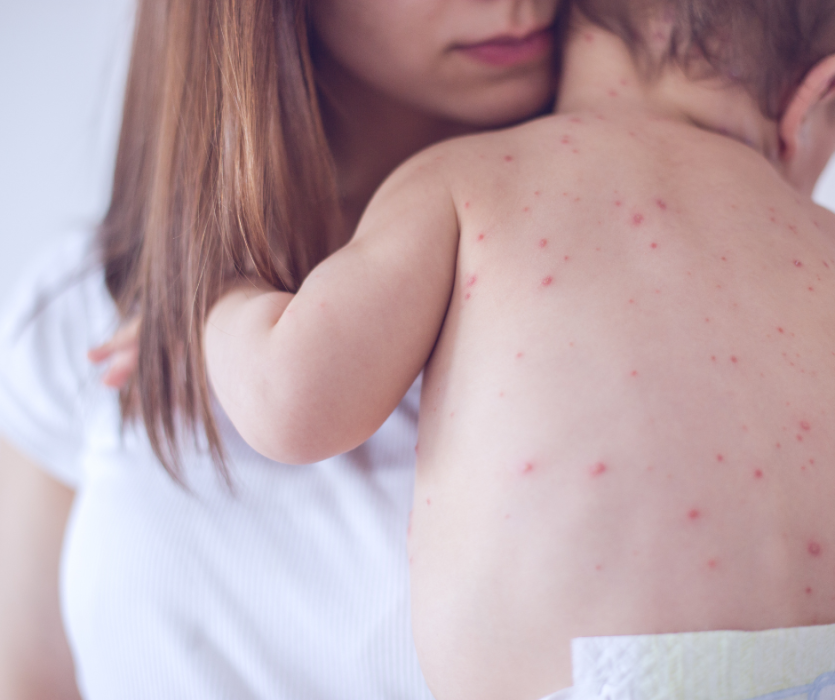
Before 1995, there was no vaccine for chickenpox, or varicella. Chickenpox is actually a serious disease that can make people very sick or can even cause death. Before the vaccine was invented, every year in the U.S. over 100 people died from chickenpox, and almost 11,000 people had to go to the hospital because of it.
The KIDS Immunization Registry can give you an official immunization record when your child enters daycare, camp, or school. You can also get an immunization record for your child if you are moving away from Philadelphia and need to show proof of immunizations. These records are always free of charge. Call 215-685-6784 to ask for records.
Please note that we may not have all of your child's records if your child has not always lived in Philadelphia. If you live in Pennsylvania but outside of Philadelphia, or if you live in Philadelphia but your child sees a doctor outside the city, the Pennsylvania registry may have your child's immunization records. Contact your child's immunization provider.
It's true that children get more vaccines now than they did in the past. This is because we can now prevent many more serious diseases with vaccines. Diseases such as measles, mumps, polio, and chickenpox used to be much more common in the U.S. before we had the vaccines to prevent them.
Young children need vaccines to make sure they are protected early in life. For more information on the number of vaccines, please visit the Children's Hospital of Philadelphia (CHOP) Vaccine Information Center.
Vaccines work by giving the body a very small amount of germs to fight. This gives the body's immune system some practice in fighting the germs that cause a particular disease, so that if a person is ever exposed to that disease, their immune system will be ready to protect them.
Every day, babies and children are exposed to many germs just by playing, eating, and breathing. Their immune systems fight those germs to keep their bodies healthy. In fact, the amount of germs that children will fight in a single day is 13 to 40 times more than the amount of germs they will be exposed to from the entire childhood vaccine schedule!
So, no, children's immune systems are not overwhelmed by vaccines. Combination vaccines, which protect against more than one disease in a single shot, are also safe for children, and children who get them will not have to have as many needle sticks!
The KIDS Plus Immunization Information System (IIS) is the Philadelphia Department of Public Health's database of immunizations given to Philadelphia residents. This database makes it easier for doctors to know which vaccines a patient needs, even if that patient changes health care providers. This system ensures that children and adults stay up-to-date for immunizations.
The Philadelphia Board of Health regulations require doctors in the city to report immunizations to KIDS Plus IIS. All records are kept safe and private. Only authorized health professionals can view them.
Immunizations are usually required to enter college or graduate or professional school, but these requirements are not set by the City of Philadelphia. Check with the specific school for more information about their immunization requirements.
As a school nurse, you can access the KIDS Registry once you have agreed to the terms of the registry's Security and Confidentiality Agreement. The registry contains immunization histories on children under 19 years of age in Philadelphia. Visit the KIDS website for more information, or email the registry for more information.
In general, a woman should make sure she is up-to-date for immunizations before she becomes pregnant. This will help protect her and her baby during and after the pregnancy. It is recommended that pregnant women get a flu shot during flu season, since they have a much greater risk of getting very sick or having to go to the hospital if they get the flu. Some other immunizations may be given to women while they are pregnant if they need them or if they are at high risk for the disease the vaccine prevents.
Other immunizations should not be given to women when they are pregnant because it is unknown whether they are safe for her baby. These vaccines include Measles-Mumps-Rubella (MMR) vaccine, Varicella vaccine, flu vaccine that is given as a nasal spray, and Human Papillomavirus (HPV) vaccine. Pregnant women who are not up-to-date for such immunizations should receive them right away after giving birth.
If you grew up in the city of Philadelphia, you can email the Immunization Program or call (215) 685-6784 to see if the Philadelphia Department of Public Health has a copy of your immunization records.
You can also contact your pediatrician(s) or the schools you attended to see if they have copies of your immunization records.
If you grew up or have lived outside of Philadelphia, you should check with the state or local health department where you lived about your immunization records.
The best way to prevent the flu is by getting a flu shot, and the best place to get a flu shot is through your doctor. Make sure that everyone in your family gets one so that you are protected during flu season.
If you are over the age of 18 and live in Philadelphia, you can visit one of the health department's many flu shot clinics held around the community during November and December.
A list of these Community Flu Clinics will be available on this webpage in the fall, or you may call the Flu Hotline after September to listen to the clinic schedule: 215-685-6458. Community flu clinics are free and open to the public. Flu shots are also available during flu season on a walk-in basis at one of our health centers.
The best place for children to get a flu shot is from their doctor. Children who are eligible for VFC vaccine can receive flu shots for free from doctors who participate in the VFC program.
Children can also get a flu shot at one of our health centers. The Community Flu Clinics that are held throughout Philadelphia are not for children.
Although influenza is fairly common (up to one out of every five people in the US will get the flu each year), it is actually a very serious disease. Each year in the US, influenza kills about 36,000 people and causes 200,000 to be admitted to the hospital.
People at greatest risk from influenza include the elderly, very young children, pregnant women, and people who have medical conditions such as asthma, diabetes, or heart disease.
Getting a flu shot every year is the single best way to prevent getting the flu. You should also make sure to do everyday things to prevent the spread of flu, like washing your hands, covering your nose and mouth whenever you sneeze or cough, and staying home from work or school when you are sick.
A new type of flu, called H1N1 influenza (or swine flu), started making people sick during the 2009-10 flu season. H1N1 flu is different from seasonal flu, but both types of flu cause the same types of symptoms in sick people, so you can't tell what type of flu a person has just by looking at them.
For the 2009-10 flu season, people needed two vaccines to protect them against H1N1 and seasonal influenza. Next flu season, people will probably be able to get one vaccine to protect them against both H1N1 and seasonal flu.