The National Weather Service (NWS) winter weather outlook for this season shows how an El Nino weather pattern will likely affect upcoming winter months with warmer-than-average temperatures expected across the Mid-Atlantic region of the United States, including Philadelphia.
The NWS also forecasts above average precipitation along the East Coast.
Last year, Philadelphia experienced historic low temperatures, high snowfall totals, frozen snowpack, ice chunks on the Delaware and Schuylkill Rivers, and lengthy Code Blue activations by the City to help keep residents safe who needed warm shelter.
To prepare for whatever winter brings, the Office of Emergency Management (OEM) worked with city departments and external partners to review last season’s response while developing this year’s Winter Weather Plan.
Here’s what you should know and what you can do at home to be ready for the winter season.
Forecast
To check the forecast for Philadelphia, simply visit the National Weather Service Mount Holly’s webpage or their social media pages.
If you’d like to take a deeper dive if snow is predicted or you’re an amateur meteorologist, look at NOAA’s National Weather Service Probabilistic Winter Storm Severity Index and Winter Storm Severity Index that shows the potential impacts of storms and possible conditions over several days.
Stay Connected
If hazardous winter weather is predicted, OEM may hold a severe weather coordination call with partners to discuss the forecast and its impact on the city.
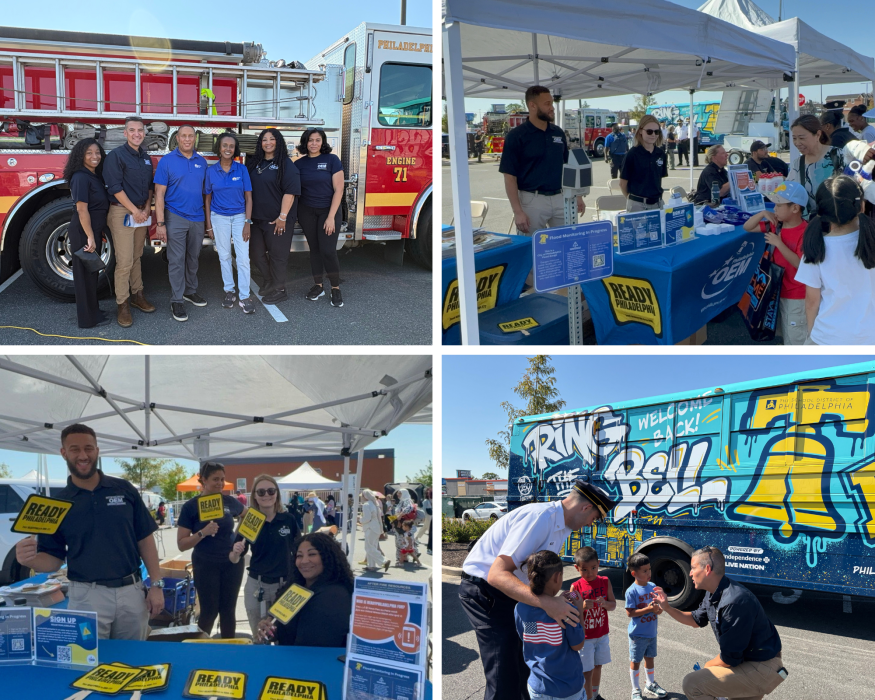
Our office will send weather alerts, like snowstorms, snow emergencies, snow squall warnings, or extreme cold weather, directly to your phone or email through OEM’s public notification system, ReadyPhiladelphia.
ReadyPhiladelphia is now available to residents and businesses in 11 different languages, including American Sign Language (ASL). Customize your alerts by visiting our ReadyPhiladelphia webpage. You can also use the quick enroll feature for free texts by sending READYPHILA to 888777.
Health
Hypothermia and frostbite are risks when spending time outside in the cold. Know the signs and treat them quickly when you spot them.
Signs of frostbite include numbness, white or grayish-yellow skin, or skin that feels unusually firm. Hypothermia symptoms include shivering, slurred speech, confusion, and exhaustion.
If you notice any of these signs, seek warmth immediately.
Here’s what you can do:
- Seek medical attention as soon as possible.
- Go to a warm room or shelter.
- Change out of wet clothing and into dry layers as soon as possible to avoid heat loss.
- Wrap up in warm layers of blankets or clothing.
- If you can, sip on warm fluids to stabilize your body temperature.
- If experiencing frostbite, place affected areas in warm-to-touch water. Never place body parts in extremely hot water or in front of a heat source as this can further harm people with frostbite.
Frozen Waterway Danger
Freezing weather can cause ponds, creeks, and waterways to ice over. Do not walk on or near icy waterways that cause life-threatening conditions.
Ice is unpredictable as far as thickness, especially when there’s moving water underneath that can cause weak spots. You are not only putting yourself in danger, but also the lives of the first responders who come to rescue you.
Code Blue
The Office of Homeless Services declares a Code Blue when the National Weather Service forecasts precipitation and a temperature of 32 degrees Fahrenheit or lower, or when the wind chill is forecasted to reach 20 degrees or below.
A Code Blue activation alerts shelter providers, increases the number of shelter beds, and puts the City’s 24/7 Homeless Street Outreach Team on high alert, operating more urgently to encourage people living on the street in freezing temperatures to let them take them to an intake center or shelter.
To get help for someone who is sleeping outdoors in the cold, anyone may call the Homeless Street Outreach Hotline at (215) 232-1984 to bring them to an intake center where staff will find and assign them to a shelter based on their needs.
If someone is not able to call, they may visit a City intake center, where staff will help locate a shelter best suited for them.
Snow Emergency
If there is an impactful snowfall, the City’s managing director can declare a snow emergency. A snow emergency is different from a state of emergency, which is declared by the mayor. During a snow emergency, vehicles parked on snow emergency routes must be moved, or they will be ticketed and towed. Parking is restricted on snow emergency routes so that snow plows can move through and clear roads. To find out if your car was towed, call 215-686-SNOW. This line is only active during a snow emergency.
There are 110 miles of snow emergency routes in the city. In order to provide effective service during winter storms, streets are divided into primary, secondary, and tertiary route systems.
The primary route system encompasses 665 miles, including the 110 miles of Snow Emergency Routes. The secondary route system includes another 700 miles of streets (both systems exclude the roadway maintained by the Parks and Recreation). The balance of City streets falls into the tertiary street system, covering approximately 1,125 miles of streets, 25 miles of which are private streets.
To view the status of salting and plowing operations during a winter weather event, visit StreetSmartPHL and click on PlowPHL.
During a snow emergency, trash pickup could be cancelled. There may also be power outages and suspensions of public transit services. Check SEPTA for service detours and cancellations.
If there are city or state vehicles out brining, salting, or plowing, stay at least six car lengths behind the vehicle for your safety and the safety of operators.
When shoveling snow, avoid creating piles that block access to fire hydrants or cover storm drains, which may create local flooding. When clearing sidewalks, make sure to clear off the curb stop, usually marked “water” or “W,” so that water can be quickly shutoff at the curb should there be issues with burst frozen pipes.
When there is any type of severe weather, check real-time road conditions on PennDOT’s interactive map or on X.
Home Fire Safety
Home heating is the second-leading cause of fires, and winter is when most household fires occur. Fifty percent of carbon monoxide incidents reported to local fire departments occur between November and February, peaking in December.
Take these precautions to help prevent emergencies and ensure your home remains a warm and safe living environment:
- Keep anything that can burn at least three feet from heat sources, including fireplaces, wood stoves, radiators, portable heaters, or candles.
- Install 10-year lithium-ion battery-powered smoke alarms and test them weekly.
- Install certified carbon monoxide alarms and test those weekly, as well.
- Clean dust and dryer lint from your home to reduce risk.
- Always plug space heaters directly into an outlet, and make sure the cord isn’t damaged or frayed.
- Maintain heating equipment and chimneys by having them cleaned and inspected each year by a professional.
The Philadelphia Fire Department (PFD) recommends having one smoke alarm on each floor of your home, including the basement. They should be 10-year smoke alarms, with sealed lithium-ion batteries. If you don’t have smoke alarms, you can request them for free through Philly311 buy them at most hardware stores.
OEM wants you to be prepared for emergencies and know what to do if you need to evacuate or shelter-in-place by making a Family Emergency Plan.
Protecting your Property
If freezing temperatures are forecast, the Philadelphia Water Department recommends these steps to take around your property to help protect your pipes from becoming damaged. Pipes are most at risk of freezing or bursting when the temperature does not go above freezing for 72 hours or longer.
- Let your faucet run at a trickle overnight during extremely cold weather.
- Keep the area around your water meter above 40 degrees Fahrenheit and cover and drafty or cracked windows near exposed pipes.
- Check your water faucets for water flow and pressure before you sleep and again when you wake up. The first sign of freezing is reduced water flow from a faucet.
The Philadelphia Water Department is only responsible for public water mains and sewer lines and is not responsible for property owners or renters’ pipes, even if they are directly outside the home. This includes the service lines that connect to the City’s water and sewer mains. Customers are responsible for fixing any broken pipes or faulty plumbing.
Customers can visit All About Frozen Pipes to learn more about what they can do to prepare along with what to do if a pipe is damaged.
Water Main Breaks
Extreme cold can cause pipes and the ground to expand and contract, and very cold river water can also make water mains break more easily. In part, those factors can help to explain why more than half of Philadelphia’s water main breaks occur during the coldest months in a typical year.
This can cause temporary loss of water or low water pressure in your home. Be prepared by storing water as part of your home emergency kit. The Office of Emergency Management suggests one gallon of water per person and pet in your home, with enough supply to last three days. You can store tap water in containers, like pitchers or ice cube trays, along with water purchased at a store.
Last winter, water department crews responded to 735 water main breaks between November and March, including 245 in February alone!
If you believe you have no water because of a water main break, call 215-685-6300 and select the emergency option. Water Department emergency crews will investigate the report.
Tip: If you think there is a water main break because you don’t have water at the tap, check with neighbors. If others on your block have water, it’s likely you have frozen pipes and may need to call a plumber.
Power Outages
Snow, ice, and high wind gusts can contribute to power outages.
Philadelphia’s power utility company PECO has ways to help before, during, and after a storm, including, preventing outages, storm readiness, storm restoration process, reporting outages online, and tracking current outages. Click on the “Outages” drop down menu on their homepage. PECO’s free mobile app also allows you to easily report outages and stay up to date on the restoration status.
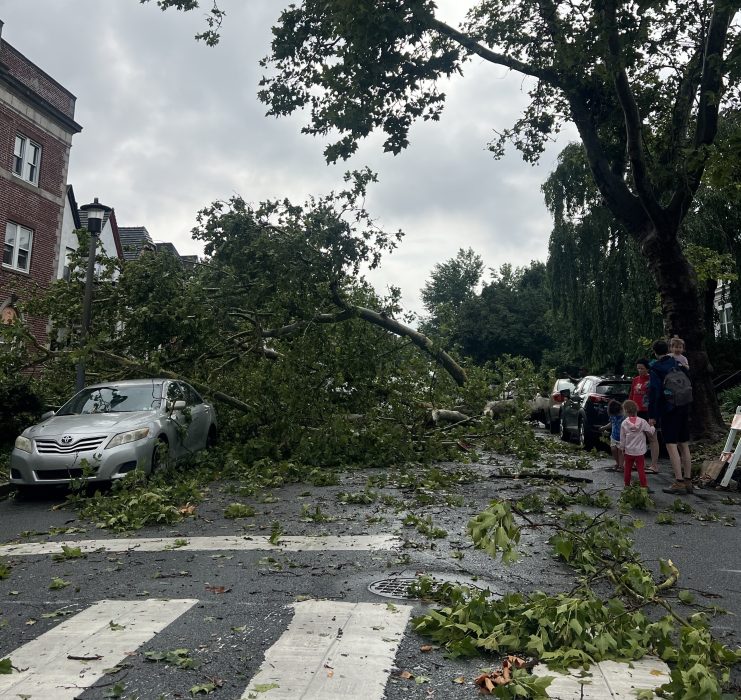
If a tree falls during a storm and poses an immediate safety threat, call 911. Otherwise, call the city’s non-emergency number 311. A crew of arborists from Philadelphia Parks & Recreation is on-call to respond to tree emergencies. In the event that a tree has fallen on electrical wires, please call PECO’s emergency line: 1-800-841-4141.
Energy Savings
Winter weather can cause your energy bill to spike and put a strain on the energy grid. Here are some ways you can save on your bill while conserving energy.
- Water Heater Setting: Water heating accounts for about 18% of home energy consumption. Reduce hot water usage by adjusting your heater to 120°F, or the Warm setting.
- Thermostat Setting: If not adverse to your health, set your thermostat to 68°F or a temp that keeps you and your pets comfy. When you’re asleep or away, turn the thermostat down. You save for each degree lower. Residents can also receive rebates from PECO and PGW for upgrading to smart thermostats that can help reduce energy use.
- Clear Path: Keep radiators, baseboard heaters, and warm-air registers free from obstructions like furniture or curtains.
- Unplug Energy Drains: There are appliances that drain energy, and your bank account, without you knowing it. Even if appliances are off, they can still use energy when plugged in on standby mode. Unplug appliances that have small-light up buttons or a display when not in use.
- Off-Peak Appliance Usage: Consider signing up for and using large appliances, like washers, dryers, dishwashers, or ovens during off-peak hours when there’s less energy demand on your energy provider. This helps stabilize the grid and may reduce your energy bill. Peak demand hours are 6am-10am and 4pm-9pm.
- Seal Air Leaks: Weatherize your home to reduce air leaks and your energy bill. Use weather stripping, caulk, or door sweeps to seal drafts around windows and exterior doors. You can also cover drafty windows with a window wrap kit or clear plastic sheet during cold months. Eligible residents may also apply to the Weatherization Assistance Program or get an energy audit to learn more ways to reduce energy use.
- Take advantage of the sun: On sunny days, open curtains and blinds during the day to let in the sun’s natural heat. Close them at night to block air leaks.
Home Heating Assistance
The Low-Income Home Energy Assistance Program (LIHEAP) is now open for the 2026–2027 season. This program provides heating assistance and crisis grants to help eligible households stay safe and warm throughout the winter and is available to eligible households using home heating oil, natural gas, electricity or other heating fuels. You can apply at www.compass.state.pa.us or by phone at 1-866-550-4355. The program is open through April 23, 2027. For in-person assistance with applications, visit your local Neighborhood Energy Center.
Along with LIHEAP help, Philadelphia Gas Works also offers crisis assistance and hardship grants.
Residents who use electricity for heating but are not eligible for LIHEAP or other utility assistance programs can enroll in PECO’s Residential Heating (RH) rate, which can help lower electricity bills in the heating season. To learn more or enroll, reach out to PECO at 1-800-494-4000.
SEPTA Winter Operations
During extreme cold weather events, SEPTA crews work to combat the challenges the excessive low temperatures present to the Authority’s operations and infrastructure.
To help protect equipment, train cars for both the B and the L will be stored in subway tunnels overnight to keep the rail cars warmer than they would be if stored at the rail yards on a normal night. By storing the cars in the tunnels, SEPTA is in the best position possible to roll out service for customers on the morning commute.
Additionally, staff will monitor rails cars that serve other lines, as well as buses and trolleys, at storage facilities.
Their structural inspection team performs cold weather inspections that may be susceptible to issues in extreme temperatures. These structures include, but are not limited to, SEPTA viaducts and some steel bridges, tunnel sections and stations that may have water leaks and others.
During periods of extreme cold, speed restrictions may be placed on Regional Rail and some trolley routes for overhead wire and track concerns. Heaters are used on track switches to prevent freezing and crews ae in the field to remove ice from overhead wires. They will also deploy additional staff to monitor conditions, particularly Regional Rail infrastructure and equipment, such as overhead power lines, signals, and switches.
SEPTA uses various methods of communications available to keep customers up to date on service status. The best tool for customers is www.septa.org/alerts, which provides real-time service status and updates on possible disruptions. Riders can also call SEPTA at 215-580-7800 to speak to a customer service representative, or download the official SEPTA app.