Section Navigation
Target 12: Reducing Vehicle Miles Traveled
Reduce Vehicle Miles Traveled by 10 percent
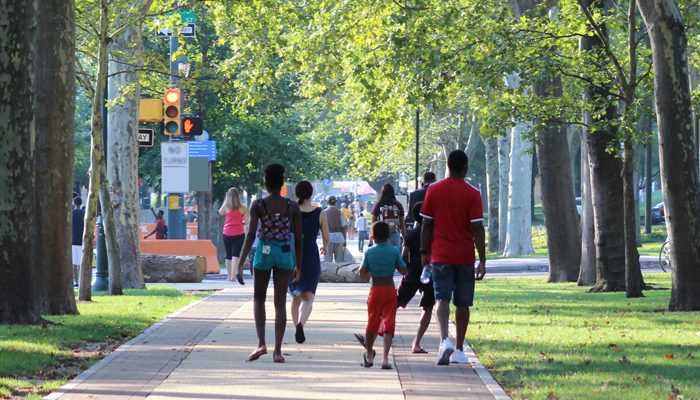
Although Philadelphia already has one of the country’s lowest rates of vehicle miles traveled per capita, Greenworks Philadelphia calls for reducing miles driven by 10 percent by 2015. Philadelphia has the type of transit system that many progressive cities are now trying to build and gives the city a competitive advantage over other cities. Greenworks Philadelphia applauds SEPTA’s efforts to increase transit ridership through further services and capital improvements and the adoption of new fare technologies. (SEPTA) Transit Oriented Development investments supported by the City will also help induce more people to take transit. Finally, the appointment of Philadelphia’s first Bicycle and Pedestrian Coordinator in 2008 will help grow the city’s thriving bicycle culture as it seeks to create a city-wide trail network.


Increase Transit-Oriented Development
Just as other cities have tried to foster commercial and residential development around newly-created public rail stations, Philadelphia must do the same with the assets its already has. Working with non-profit partners like Neighborhoods Now, the Nutter Administration is committed to investing in areas adjacent to transit hubs that SEPTA will be renovating. In those locations, SEPTA will upgrade stations, making them aesthetically pleasing, well-lit and secure. The City’s Streets Department will support these efforts through investments in lighting, sidewalks, bike lanes, street furniture (including bike racks), signage and greening. Car sharing parking spots will be created. The target areas may also be rezoned to accommodate mixed residential and commercial uses. The Pennsylvania Community Transportation Initiative has set aside $60 million for TOD projects. According to TOD advocates, these public investments will encourage private-sector development in adjacent areas. Philadelphia is well positioned to attract a portion of these public dollars.
BACK TO TOP

Develop a Pedestrian and Bicycle Master Plan
The Philadelphia City Planning Commission is developing its vision for a continuous bicycle network in the city. This work involves revisiting and remapping the 1998 Philadelphia Bicycle Network plan, examining how the physical environment has changed in the interim years. The new plan will also propose city-wide policies for sidewalk design and uses within sidewalk space to protect pedestrian corridors. These recommendations could then be incorporated into the City’s zoning code. For more information about the new Bicycle Network Plan go to the Streets Department’s website. Work is also being done to develop a link to Center City Philadelkphia to the East Coast Greenway. For more information about the Streets Department’s bicycle work.
BACK TO TOP
Explore the Creation of a Bicycle-Sharing Program
Originating in European cities such as Paris and Lyon, the idea of a bike sharing program here in Philadelphia has gained momentum over the past two years. A bike sharing program enables a person to rent a bicycle at one of many unmanned stations located throughout a city and then return it to another location close to one’s final destination. In January 2009, the Bicycle Coalition, using support from the William Penn Foundation, commissioned a study to explore what operational models might be appropriate for use in Philadelphia. Among other things the plan will define and estimate the size of the target market, assess the applicability of current bikeshare operational models, estimate capital and operating costs and determine what level of public investment would be needed to support such a program. The City will be working closely with the Bicycle Coalition over the next several months to work through these issues and hopes to have preliminary recommendations by late 2009.
BACK TO TOP