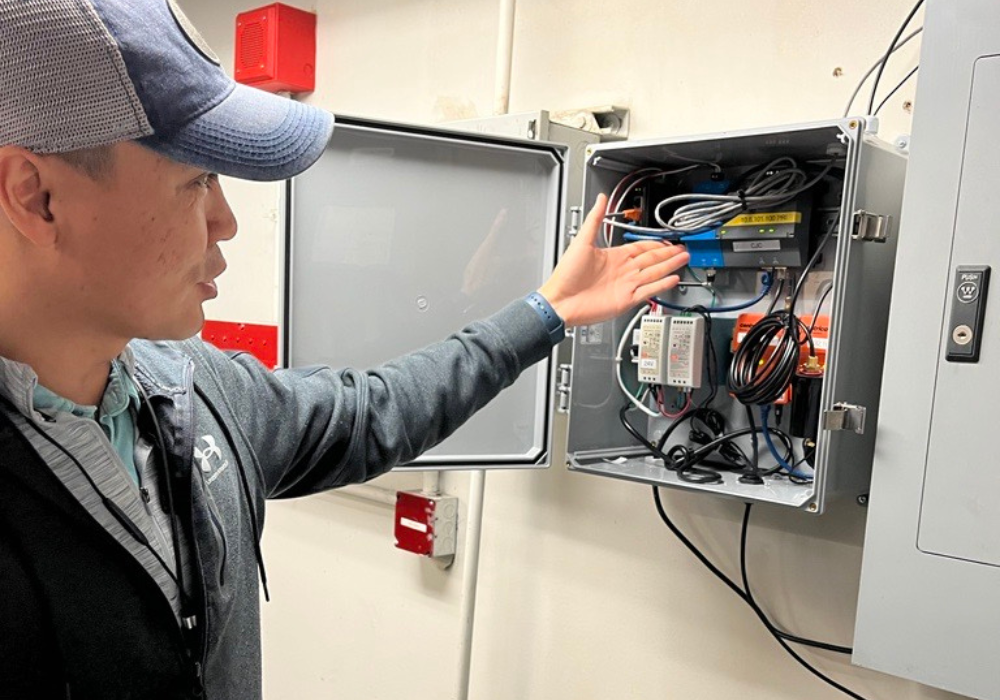
Across Philadelphia, City buildings rely on Building Automation Systems (BAS) to keep employees and visitors comfortable while managing energy use behind the scenes. These systems connect heating, ventilation, and air conditioning (HVAC) equipment to a central software platform. Using sensors and controls, BAS can detect performance issues, turn equipment on and off based on when people are in the building, and adjust temperatures and airflow. The software also collects detailed data to help the City make smart energy decisions. Now, the City is working to expand this effort to improve how buildings perform and feel every day.
The Building Monitoring Program
The City’s Building Monitoring Program (BMP) expands the use of BAS across municipal buildings. It optimizes BAS in the four largest municipal buildings downtown:
- City Hall
- One Parkway Building (OPB)
- Municipal Services Building (MSB)
- Juanita Kidd Stout Center for Criminal Justice (SCCJ).
The program analyzes data from these systems and makes sure equipment runs only when needed. This helps avoid unnecessary energy use, reduce maintenance costs, and improve system performance. These efforts have saved the City more than $250,000, while making City facilities more comfortable and reliable.
The Building Automation Systems Network pilot project
In 2024, the City launched the Building Automation Systems Network (BASNet) pilot project to expand the impact of this work and address emerging operational and security needs. BASNet creates a dedicated virtual network that connects BAS across City Hall, OPB, MSB, and SCCJ. It standardizes and centralizes building automation systems that were previously fragmented.
The project is led by the Office of Sustainability’s Division of Energy and Climate Solutions, in partnership with the Department of Public Property and the Office of Innovation and Technology.
Project goals
The BASNet pilot project aims to:
- Strengthen cybersecurity. By bringing systems onto one secure network, the City can better protect them from cyber threats. A centralized network also makes it easier to keep software updated and ensure equipment stays connected. This proactive approach reduces vulnerabilities and safeguards critical infrastructure.
- Run buildings more efficiently and effectively. Centralized data and standardized systems allow for faster troubleshooting, more consistent building performance, and deeper energy analysis. These improvements promote cost savings, improve comfort for building visitors and occupants, and support more strategic participation in demand response programs.
- Help Philadelphia meet climate goals. In Philadelphia, buildings are responsible for roughly 70% of citywide greenhouse gas emissions. Improving how they operate is an essential part of lowering emissions.
BASNet lays the foundation for smarter, more resilient City facilities. It advances energy efficiency, strengths security, and prepares Philadelphia’s municipal buildings for the future.
The Clean Energy Investments blog series highlights recent projects supported by the Office of Sustainability’s Division of Energy and Climate Solutions (DECS). DECS leads projects that improve energy efficiency and resilience in City-owned buildings. The projects are funded through direct capital investments, including DECS’ Energy Infrastructure and Efficiency Fund (EIEF), and large-scale energy performance contracting.