economy
Target 13: Maintain Public Infrastructure
Increase the State of Good Repair in Resilient Infrastructure
Even as new buildings and parks are created in Philadelphia, the City must also ensure that its existing infrastructure is in a state of good repair so that “no backlog of needs exists and no component is beyond its useful life.” Currently less than 74 percent of City-owned buildings, streets, bridges and utility infrastructure meet this definition—though there are wide variances among categories. A few City departments already have existing asset management systems that are well-used by their employees, others do not. By 2015, Greenworks Philadelphia calls for 80 percent of the City’s infrastructure to be in a state of good repair. Steps must also be taken now to begin to adapt our infrastructure to certain climate changes caused by global warming.

Investment in Public Property Management System
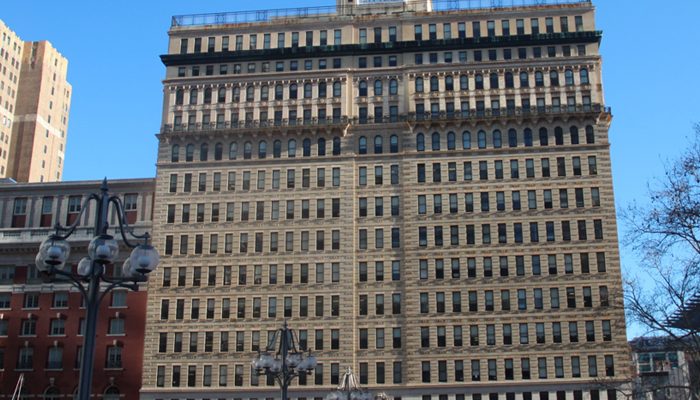
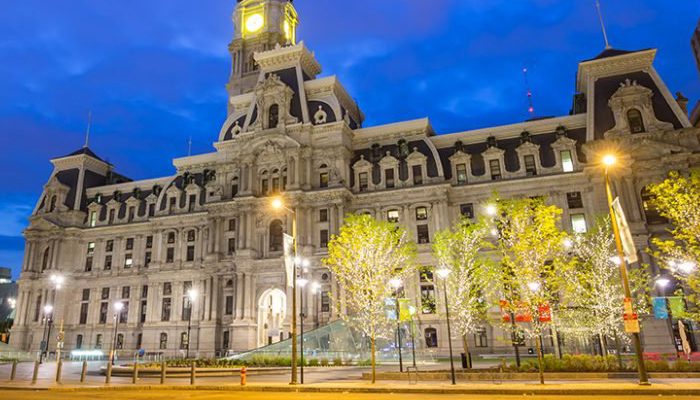
The City of Philadelphia owns 11.4 million square feet of buildings in 1,230 structures spread throughout every neighborhood. Its inventory consists of structures that were built in the 1800s and some built as recently as this past year. It owns libraries, recreation centers, fire and police stations, senior centers, health clinics, high rise office buildings, prisons and even a forensic lab. Managing all of these different types of buildings is a difficult and expensive job. Greenworks Philadelphia supports the Department of Public Property’s development of a facilities management information system.
BACK TO TOP
Improve Road Maintenance and Upgrade Bridges
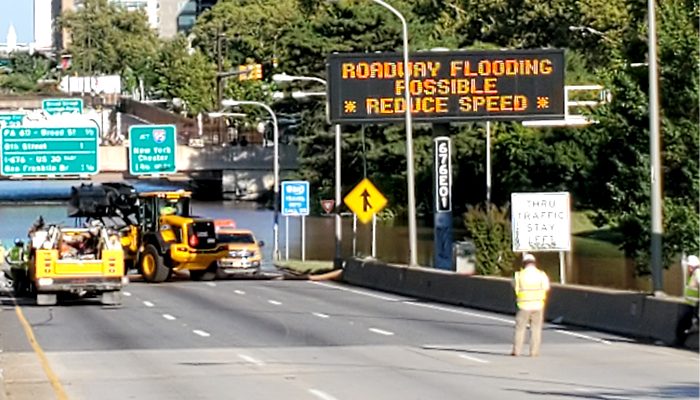
Smooth roads and sound bridges are safer for pedestrians and cyclists, more comfortable for transit riders and reduce wear and tear on every kind of vehicle. With updated data on road and bridge condition, the Streets Department can make wiser choices in how it invests its capital dollars. Currently, the City road repaving program is driven by data that is several years old. The City has recently started a roadway inspection program with the goal of updating all roadway condition data by the Fall of 2010. Using this information, and asset management software, the Streets Department will create a system to better plan its road maintenance program.

However, improved information is simply a first step. Significant financial resources are required to bring hundreds of miles of City roads and dozens of bridges into a state of good repair. The costs of asphalt, concrete and steel have reached record levels in recent years and the local labor market’s wages have risen with inflation. These price increases have, in turn, decreased the amount of work the City can accomplish with the same funding level. The estimated cost to upgrade the structurally deficient bridges is more than $230 million. The estimated cost to clear the repaving backlog in FY 2011 would require a roughly $35 million commitment with millions more each year to maintain a quality system. New methods, such as the use of recycled or hot-in-place asphalt, offer the City a way to decrease repaving costs. This system, which remixes asphalt that is milled from the existing roadway, reduces costs, construction impacts, energy consumption, and thousands of tons of asphalt waste every year.

The City has quickly deployed $13 million in Recovery Act funding to resurface 23 miles of streets and upgrade 1500 curb cuts to meet current ADA standards. For more information about the Recovery-funded repaving project see the press release or a map of streets that will be repaved.

BACK TO TOP