Plan Element: Transportation
GHG emissions from the transportation sector are generated from the consumption of fuels by transportation vehicles, including automobiles, all forms of material transport, and all forms of public transport. Emissions attributable to transportation are estimated to account for 25 percent of Philadelphia’s GHG inventory. Efforts to reduce GHG emissions from transportation will reduce the total vehicle miles traveled by highway vehicles, use less polluting sources and mixes of fuel for transportation, and increase the efficiency of various modes of transportation.
(Inventory Impact: C=Community, CG=City Government)
- Ensure adequate and predictable funding for transit operations and infrastructure. (C) Preserve and enhance transit service to help reduce automobile trips, auto fuel usage, air pollution, and road congestion. Support the work of the Commonwealth to address transit funding and service as part of an overall transportation system that supports sustainable land use and economic development. Service by SEPTA, NJ Transit, PATCO, AMTRAK and others must be frequent, reliable, safe, clean, and comfortable. Going forward, long-term funding should enable transit providers to plan and invest in service enhancements and fuel-efficient equipment that help to reduce Philadelphia’s GHG emissions and average daily vehicle miles traveled per capita.
- Reduce vehicle fuel consumption by City Government vehicles by 5 percent from 2006 levels by 2010. (CG) Continue the efforts of the Office of Fleet Management to improve the fuel economy, improve the emission performance, and reduce the size of municipal fleets. Build on the Managing Directors Office’s support for car sharing and pre-tax benefits to employees for transit use. Seek financial assistance from other governments and organizations to accelerate the replacement of older vehicles with reliable, task-appropriate vehicles that are more fuel-efficient and less polluting. Encourage expanded use by City employees of fuel-efficient shared vehicles, transit, bicycling, and walking. Steadily increase the share of City vehicles powered by hybrid systems or alternative fuels. Going forward, the City should by 2015 reduce overall vehicle fuel consumption by at least 15 percent and increase to 15 percent the share of hybrid or alternative-fuel powered vehicles in City fleets.
- Reduce vehicle fuel consumption by non-City fleets by 5 percent from 2006 levels by 2010. (C) Parallel to City efforts, the operators of public and private non-City fleets should also use management techniques and upgraded vehicles to improve the overall fuel economy and emission performance of fleet vehicles. Identify programs and resources to help SEPTA, the School District, utilities, taxi companies, car rental companies, and other fleet owners to replace older vehicles with more efficient models. Going forward, the owners of non-City fleets should by 2015 reduce overall vehicle fuel consumption by at least 15 percent and increase to 15 percent the share of hybrid or alternative-fuel powered vehicles in non-City fleets.
- Develop and implement updated parking policies and codes. (C) As a next step in Philadelphia’s environmentally-conscious updating of codes and development regulations, work with public and private stakeholders to propose and adopt updated parking policies and regulations that fairly yet directly address the external impact of automobile use in an urban environment. Build on recent Planning Commission, Parking Authority, and Department of Licenses & Inspections efforts to make the City's approach to parking more consistent with 'best practices' in sustainable planning and development. Use pricing, marketing and information systems, regulations for parking location and design, and other parking management strategies to encourage travelers to use transit. Going forward, integrate updated parking policies and codes into a comprehensive update of City development regulations and incentives.
- Expand anti-idling measures. (C) Continue and expand enforcement of anti-idling regulations by Air Management Services and the Philadelphia Parking Authority to reduce emissions from trucks and buses. Going forward, incorporate anti-idling measures into the design of all major new facilities, and encourage plug-in infrastructure and driver comfort stations so that truck and bus engines can be turned off during lay-overs.
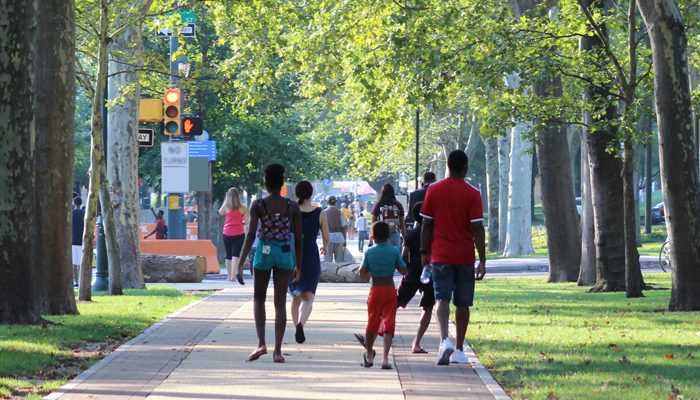
- Improve citywide bicycle and pedestrian accessibility. (C) Boost public/private resources for the design and implementation of bicycle and pedestrian networks and facilities. Reinforce the inherent advantages of many City neighborhoods as walk-able and bike-able communities. Enable Planning Commission and Streets Department staff to fully support the Bicycle/Pedestrian Advisory Task Force and to develop citywide and district plans for bicycling and pedestrians. Going forward, adopt a “complete streets” policy to ensure that walking and bicycling receive adequate attention in all transportation planning and operations.
- Invest in transit and private vehicle infrastructure to increase electrification of the transportation sector. (C) Support the enhancement of existing infrastructure for electric-powered vehicles. Decrease the number and proportion of vehicles operating on carbon-based fuels. Where local electrical power remains less dependent on traditional coal, oil, and gas generation, as it is in Philadelphia, the environmental performance per mile of electric trains, trolleys, buses, trucks and cars is superior. Going forward, assess the needs for infrastructure necessary to support additional electrification of transit services and private vehicles.
|