Origins and Revolutionary War Significance
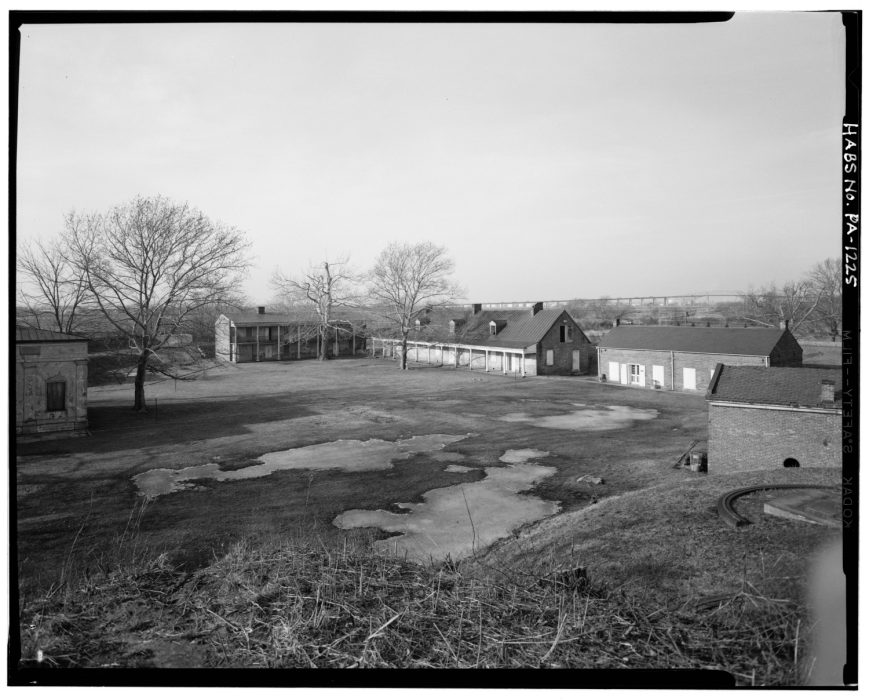
Construction of Fort Mifflin, known early on as the Mud Island fort, began in 1771 but went unfinished for a lack of funds. Even after the Revolutionary War broke out in 1775, serious efforts to finish the fort began only after a small British flotilla entered the Delaware River in April 1776. The fort was built on Mud Island, then in the middle of the Delaware River, just below the city and mouth of the Schuylkill River. Mud Island is long gone, as the channel separating the island and riverbank was infilled in the 1800s. Fort Mifflin was typical of eighteenth-century forts, featuring angular stone walls with bastions holding cannons at the corners. Wooden buildings that housed troops were in the center of the fort.
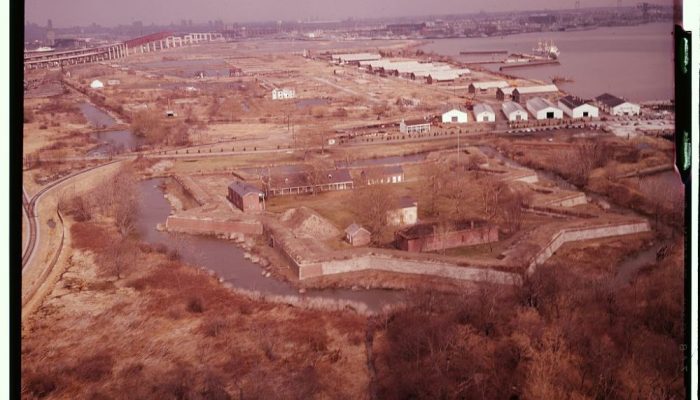
In September 1777, British troops occupied Philadelphia. In October, a British fleet arrived to clear the American defenses in the Delaware River. Fort Mifflin exchanged fire with British ships, whose ability to move was hampered by American fire from the shore and obstacles placed across the river. By mid-November the British had cleared the obstacles, surrounded Fort Mifflin, and unleashed an intense bombardment. With the garrison’s strength reduced by two-thirds and supplies low, the Americans abandoned the fort during a rare break in the bombardment. Although Fort Mifflin fell, the staunch defense delayed British control of the river which limited the Royal Navy from aiding British soldiers on land. The British were forced to evacuate Philadelphia only nine months later, having failed to capture Congress or the Continental Army. Thus, the Revolution persisted.
Evolution through the Ages
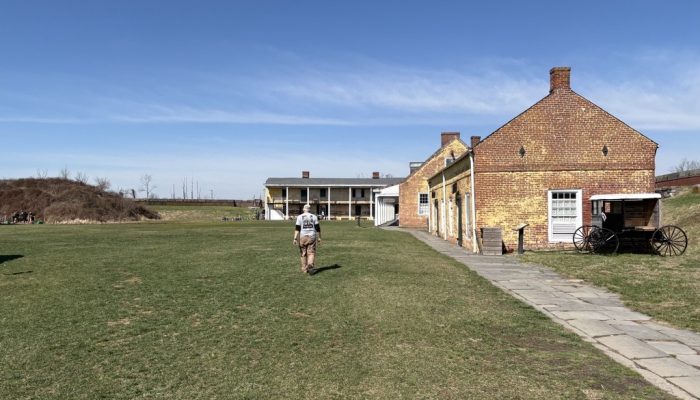
Fort Mifflin was almost completely destroyed in 1777 except for a portion of the stone walls, which remain there to this day. The United States repossessed the fort shortly after the British occupation of Philadelphia ended. Fort Mifflin’s oldest surviving buildings likely date to the 1790s, when rising tensions with France and Great Britain spurred investment in coastal defense. The fort underwent several cycles of renovation and neglect as concerns over coastal defense ebbed and flowed through the 1800s. Fort Mifflin was used as a military prison during the Civil War, mostly for Union soldiers who had committed criminal offenses, but it did briefly hold Confederates captured at Gettysburg. The Army recognized Fort Mifflin as obsolete by 1904, when its remaining guns were removed, and even declared it a historic monument in 1915. During World War I, however, Fort Mifflin was repurposed as a Navy ammunition depot, a role it held again in World War II.
Preservation and Current Use
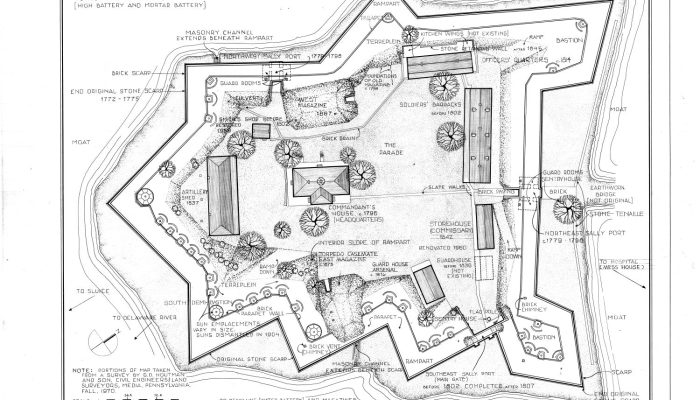
Fort Mifflin was finally decommissioned in 1954 and two years later was one of the first properties added to the Philadelphia Register of Historic Places. Fort Mifflin is owned by the City of Philadelphia but managed by an organization now known as Fort Mifflin on the Delaware. This group ensures that the site is accessible to the public, overseeing continual renovation and rehabilitation of the fort’s many structures. It hosts the general public, professionals, and students alike, conducting tours and hosting events. Fort Mifflin’s primary mission is now to promote the study of history, archeology, and historic preservation as students and visitors explore the fort’s evolution over 250 years.
To celebrate the 250th anniversary of the Declaration of Independence, the Philadelphia Historical Commission is spotlighting buildings or sites which existed in 1776. All are listed on the Philadelphia Register of Historic Places. Check back for another featured property and visit our Instagram page (@phlplandevelop) for historic images of this site and others in the series under the hashtag #PRHP1776.