Building Philadelphia
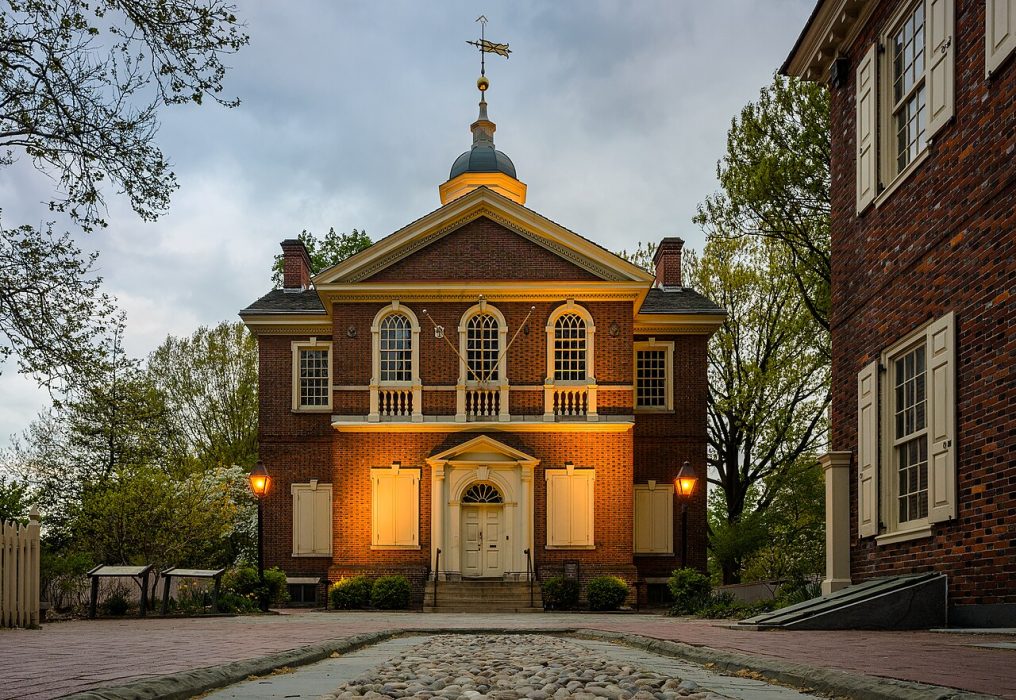
In 1724, builders in Philadelphia founded the Carpenters’ Company of the City and County of Philadelphia. The Company’s early members included those who built Philadelphia landmarks such as Gloria Dei Church (also known as (Old Swedes’ Church), Independence Hall, and Christ Church.
First and Second Continental Congresses
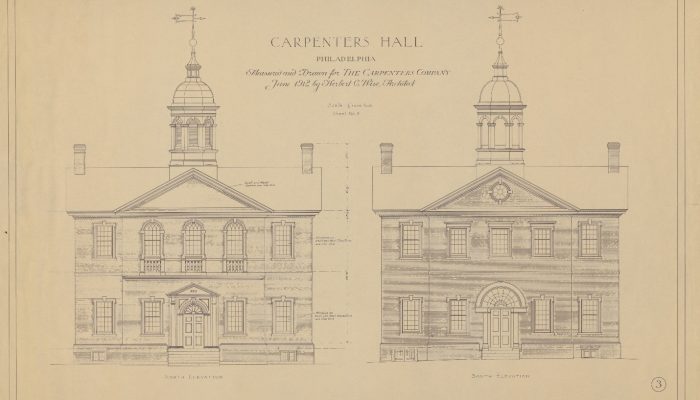
In 1774, the Company constructed this building, designed by member Robert Smith, for its headquarters. That fall, the Hall hosted the First Continental Congress. At this gathering, representatives of 12 British colonies convened to discuss what they will do to respond to the Intolerable Acts passed by Parliament. The Intolerable Acts punished Massachusetts for the Boston Tea Party. The Congress wrote a petition to King George III to request that he repeal the Intolerable Acts and listed grievances. The Congress also initiated a collective boycott against British merchants. The meeting set the stage for the Second Continental Congress, which resulted in the Declaration of Independence.
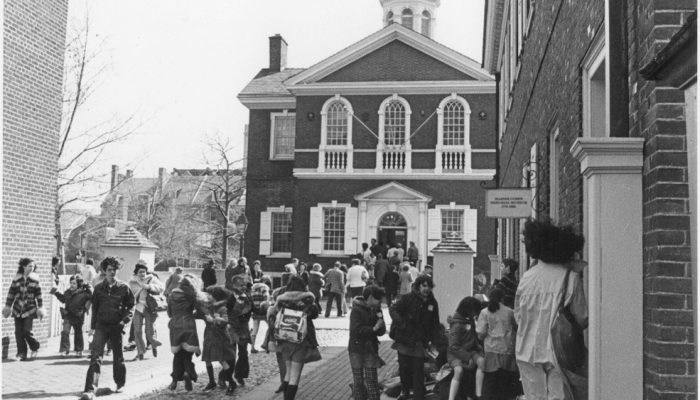
During the Second Continental Congress, the Pennsylvania Provincial Congress met in Carpenters’ Hall. A week of meetings resulted in a declaration of the independence of the Commonwealth of Pennsylvania, mobilizing the Pennsylvania militia for the Revolutionary War, and calling for a state constitutional convention.
The Carpenters’ Company rented its Hall to other organizations. The building served as the early home of institutions such as the Library Company of Philadelphia, the American Philosophical Society, the Bank of the United States, the Philadelphia College of Pharmacy, and the Franklin Institute.
Museum in a Park
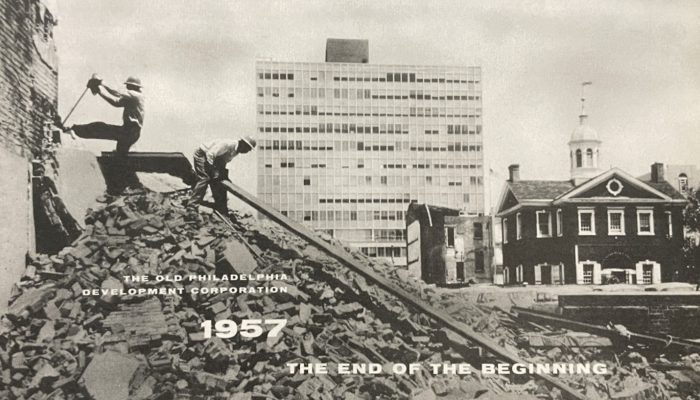
In 1857, Carpenters’ Hall was opened to visitors as a historic site, one of the first in the nation. A century later, the buildings which surrounded the Hall were demolished in the creation of Independence National Historical Park, and several replica buildings reconstructed.
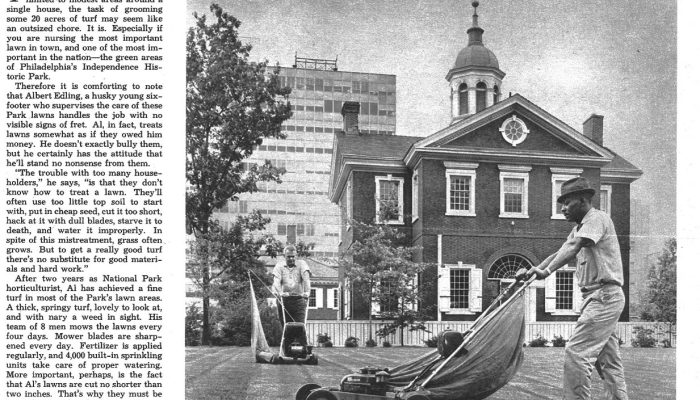
Charles E. Peterson, a member of the Carpenters’ Company, oversaw the restoration of Carpenters’ Hall in the early 1950s. He also established the Historic American Buildings Survey and was part of the team that created Independence National Historical Park. Peterson was a member of the Philadelphia Historical Commission from its founding in 1956 until 1962. Carpenters’ Hall was included in the first 100 buildings added to the Philadelphia Register of Historic Places in 1956.