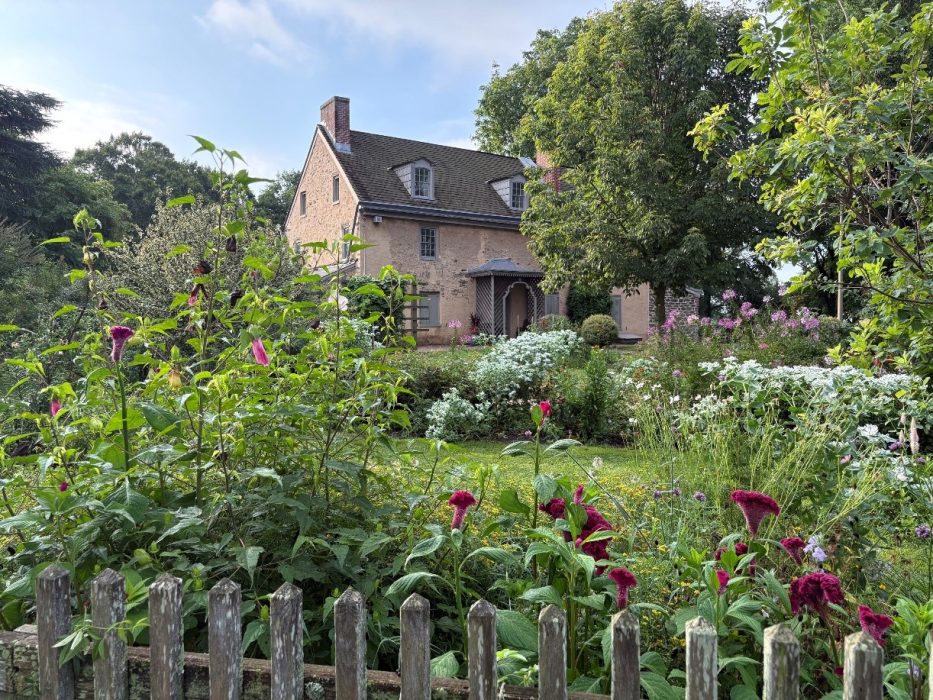
Hatfield House, standing at 33rd Street and Girard Avenue in Fairmount Park, was not always at this location—nor did it always look as it does today. The oldest part of the building was constructed between 1750 and 1760 as a small country farmhouse. It was originally located near the lower end of Germantown between Clarissa Street and Pulaski Avenue, along what was then Knight’s Lane (now Hunting Park Avenue).
A Rural Farmhouse
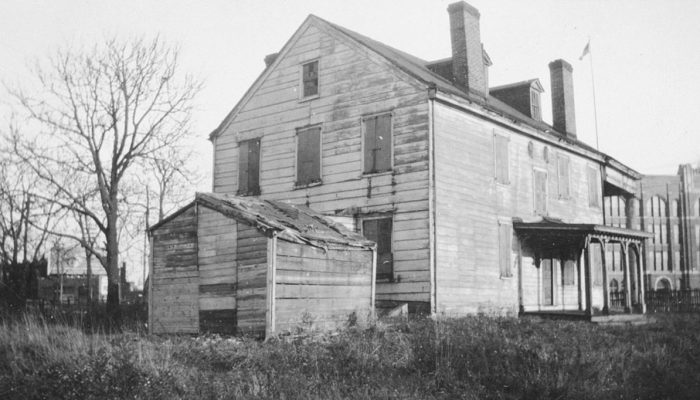
In the mid-18th century, Philadelphia was rapidly expanding, but the surrounding countryside remained open farmland. The two-and-a-half-story wood-frame structure represented a simple colonial farmhouse built for practicality rather than display.
Further Transformations
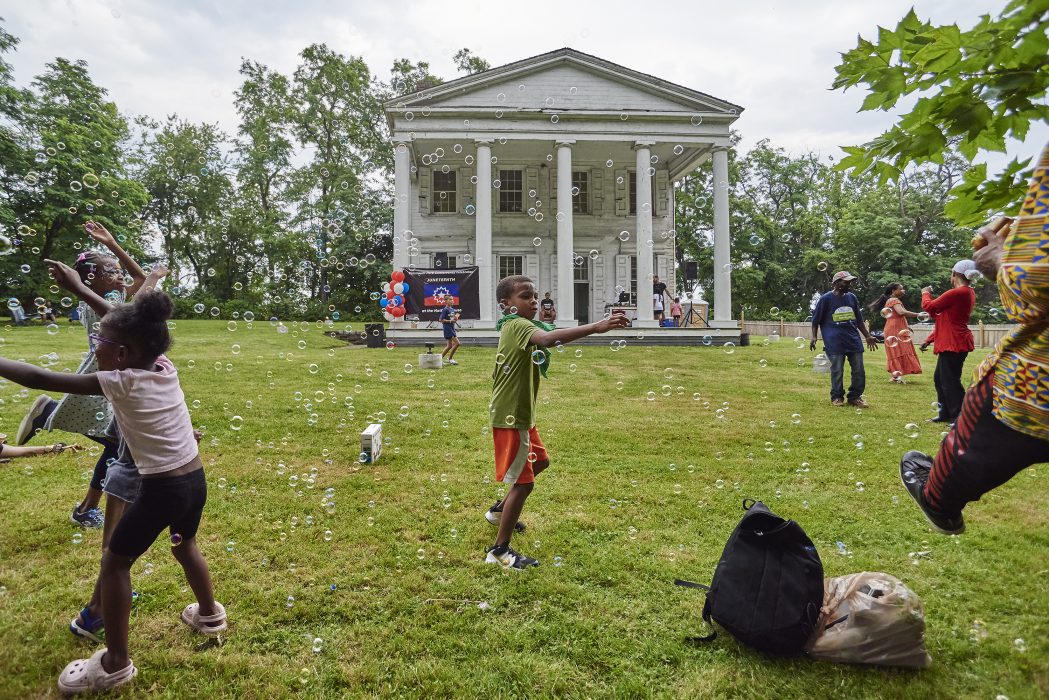
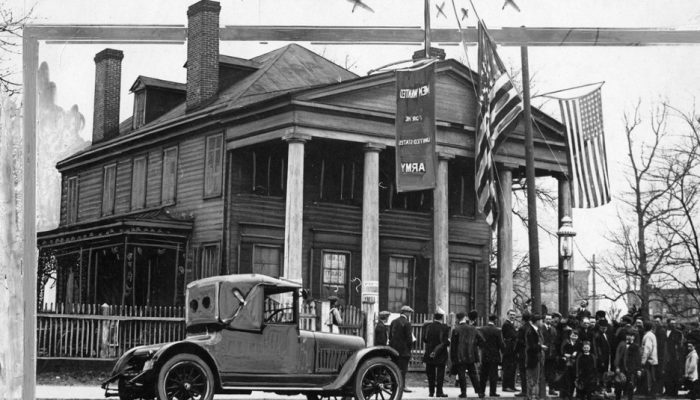
A major transformation came in 1838, when owner William J. Hay remodeled the house to reflect the popular style at the time. The remodeling efforts added a grand Greek Revival portico supported by five tall columns. This addition gave the modest farmhouse a classical, elegant façade inspired by ancient Greece. Behind the fancy front, however, much of the 18th-century structure remained intact—an architectural blend that survives today.
In 1854, the property was purchased by Dr. Nathan Lewis Hatfield, a physician and University of Pennsylvania professor. The Hatfield family used the house as a summer retreat for roughly 75 years. During this period, the estate’s 17 acres also served military purposes. The grounds hosted mock battles and drills for local military units. During World War I, Dr. Hatfield’s son, Major Henry Reed Hatfield, offered the property to the government for use as an army recruiting station.
Relocated and Restored
After the war, the house stood vacant until the late 1920s, when Major Hatfield donated it to the City of Philadelphia. In 1930, the house was threatened by encroaching development along Hunting Park Avenue. To save it, Major Hatfield paid for it to be carefully dismantled into eight sections. Then, it was moved four miles to its current location in Fairmount Park and restored.
Restored (again) and furnished by the Philadelphia Museum of Art, the house was reopened as a museum during the 1976 Bicentennial. In the following decades, it served as offices for local nonprofit organizations and included a live-in caretaker.
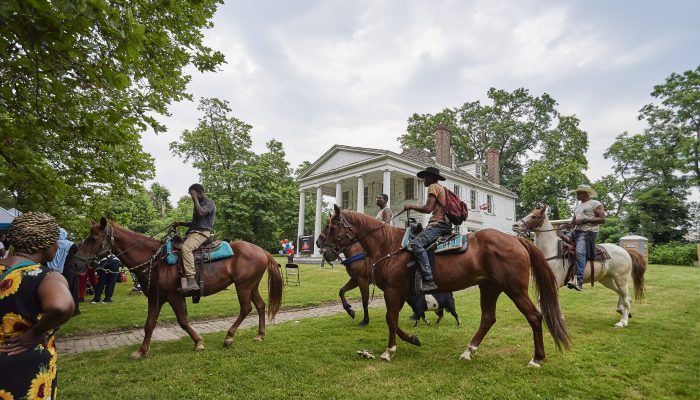
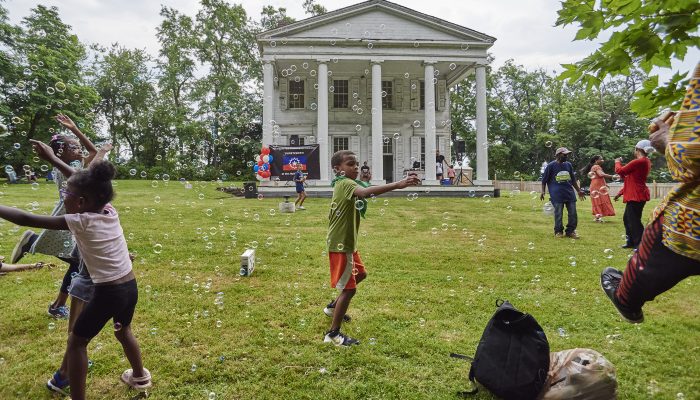
In 2017, the Fairmount Park Conservancy transformed the site into a community-focused arts and cultural space. A one-year artist residency launched this new chapter, with a focus on the area’s Black history and culture. Since then, the Hatfield House has hosted art exhibitions and community events. In 2021, it hosted an Afrofuturist installation by Black Quantum Futurism that reimagined neighborhood memory and time. Today, the Hatfield House offers a link between Philadelphia’s past and its creative present.