America’s First Paper Mill Village
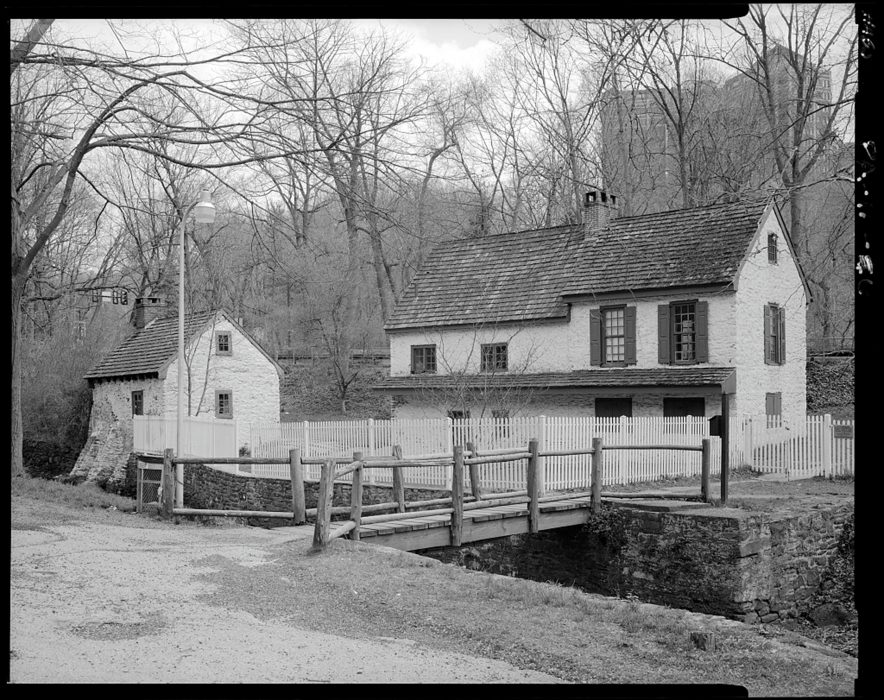
In the woods along a small stream in today’s Fairmount Park sits Rittenhouse Town, one of Philadelphia’s oldest historic sites. It began in 1690, when Wilhelm Rittenhouse, a skilled papermaker from Germany, built the first paper mill in British North America. This small mill, powered by a branch of the Wissahickon Creek, supplied paper to print shops in Germantown and Philadelphia. The success of the mill led to the growth of a little community of homes and workshops that came to be called Rittenhouse Town.
Wilhelm Rittenhouse was born around 1644 in Mülheim, Germany, with the family name Rettinghaus. He learned papermaking at a young age[BB1.1][AM1.2][BB1.3], worked in Amsterdam for a time, and came to Pennsylvania in 1688. In addition to being a craftsman, he was also the first Mennonite bishop in America. Heserved his community in both spiritual and practical ways. He introduced European papermaking skills to the colonies, giving local printers a steady supply of paper and laid the foundation for an American industry. His descendants continued the business for generations. His grandson, David Rittenhouse, became a famous astronomer, surveyor, and statesman.
A “Town” Emerges
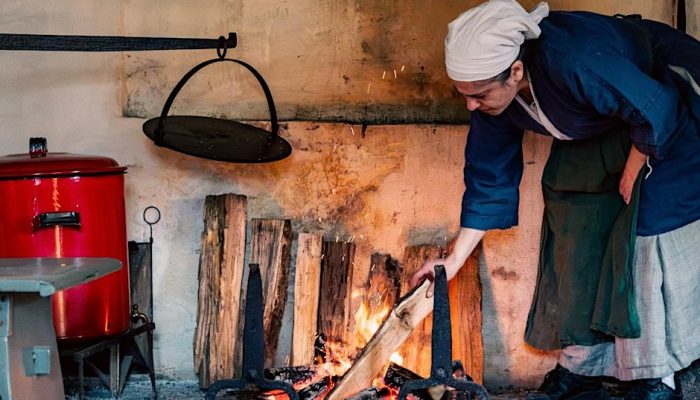
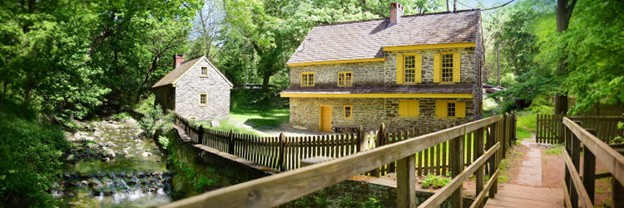
Life in Rittenhouse Town revolved around the mill. Paper was made from old linen and cotton rags that were cleaned, broken down, and shaped into sheets with the help of the creek’s waterpower. Over time, the Rittenhouse family built stone houses, a bake oven, and workshops. They created a small but busy village. By the mid-1700s, the settlement had become a well-known source of paper for the region’s printers and publishers.
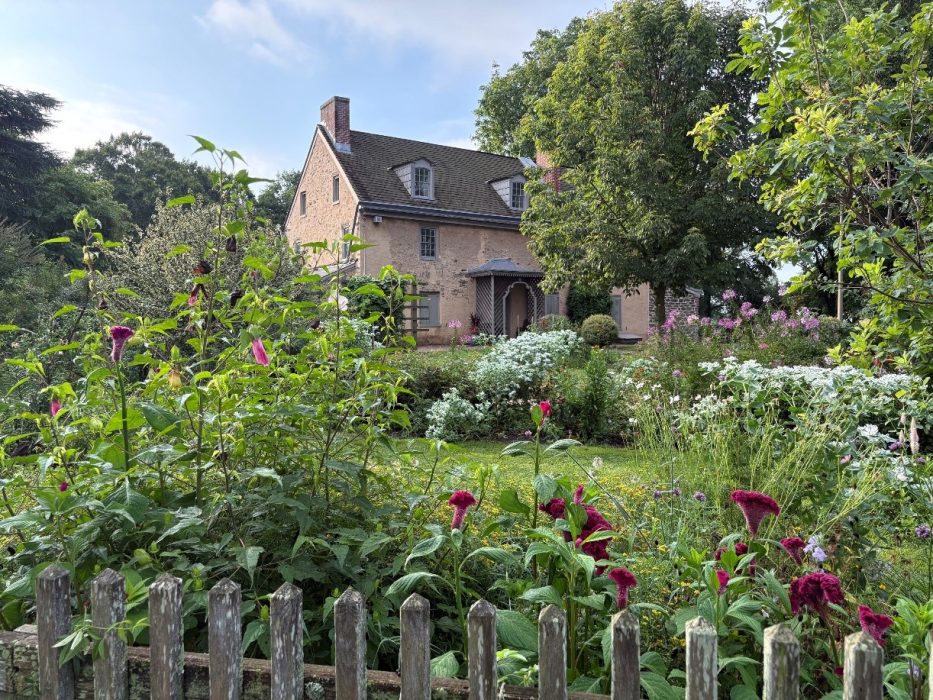
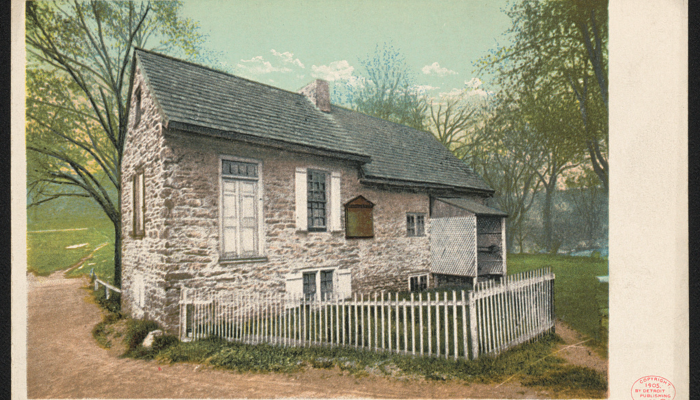
Several of the buildings that stand at Rittenhouse Town today were built before the American Revolution. The oldest is the Rittenhouse Homestead, built in 1707. This later became the birthplace and childhood home of David Rittenhouse. The stone Bake House, built around 1725, still shows its large beehive oven, and another early home, the Abraham Rittenhouse Home from about 1720, also survives. These buildings provide a direct link to the colonial village as it would have looked in 1776. Other houses on the site were added in the 1800s, after the Revolution.
Decline and Preservation
By the 1800s, the paper mill business slowed down and many of the structures fell into disrepair. When the Fairmount Park Commission acquired the land later that century, they tore down a number of old buildings. Thankfully, the most important houses were saved by descendants of the family and local preservationists. Today, Historic Rittenhouse Town manages the site as a museum and teaching center. Visitors can tour the stone houses, explore the bake oven, and even try making paper by hand, much as Wilhelm Rittenhouse once did more than 300 years ago.
Walking through the village today gives a powerful sense of early Pennsylvania life. It has narrow paths, old stone walls, and a stream running nearby. . Rittenhouse Town may be small, but it tells a big story. It shows us how one immigrant family’s skill in papermaking helped support printers, encouraged the growth of a new industry, and left behind a community that still speaks to us about the hard work and creativity of America’s early colonists.
The complex was added to the Philadelphia Register of Historic Places in 1956.