Sign In

Urban Forestry & EcoSystem Management (UFEM)

Philadelphia Parks & Recreation, through its Urban Forestry and EcoSystem Management Division, undertakes a broad range of environmental restoration activities throughout the park system.
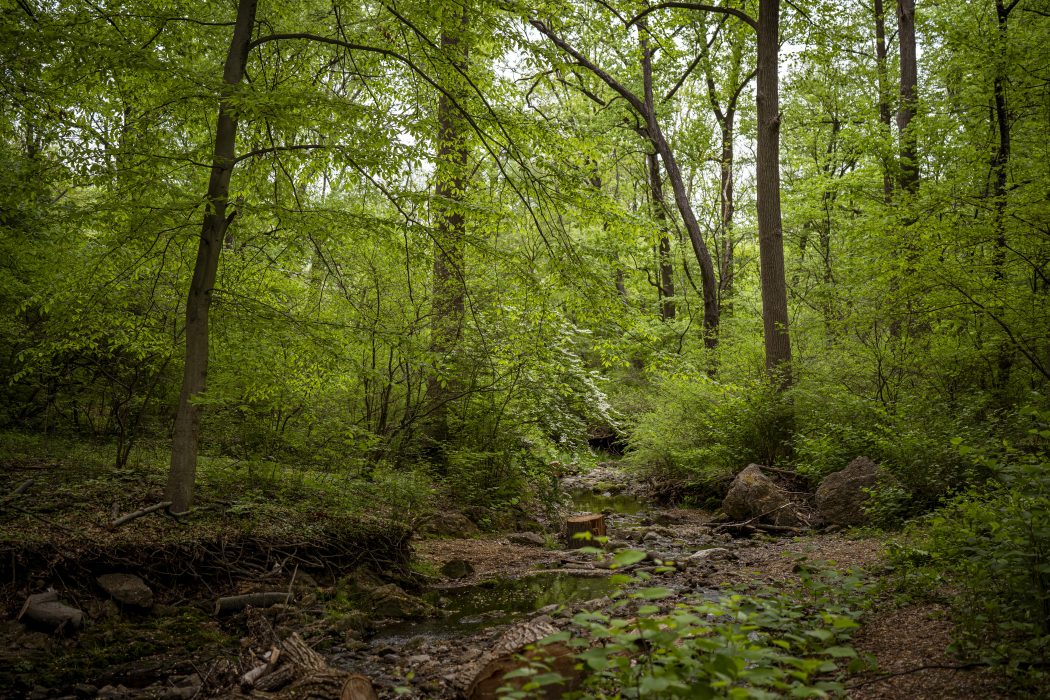
The 5,600 acres of woods, streams, lakes, wetlands and meadows represent just under 60% of our system's 10,000 total acres. An amazing statistic for the 5th largest city in the United States!

To better understand the health of our environmental resources, from 1998-2001 Fairmount Park, the Patrick Center for Environmental Research at the Academy of Natural Sciences of Philadelphia (ANSP), other environmental organizations, and interested community members and organizations worked together to develop natural land restoration master plans for the system's major watershed and estuary parks.
The Plans include:
  • Goals and guiding principles for restoring the park system's natural areas
  • Historical information on plants and animals of the park system from taxonomic collections, published literature and other sources
  • Vegetation types and disturbance from aerial photography and floristic and ground surveys
  • Surveys of birds, reptiles, amphibians, fish, aquatic macroinvertabrates, mollusks and several groups of terrestrial insects
  • Physical and biological conditions of all streams
  • Data from various sources using a Geographic Information System (GIS) linked to databases on the flora and fauna of the parks and proposed restoration sites
  • Identification of sites needing restoration and recommended restoration activities.

Watershed and Estuary Parks

Most activities occur primarily on the 5,600 acres of natural lands in the system's seven largest watershed and estuary parks.

  • Cobbs Creek Park
  • East & West Fairmount Park
  • Franklin Delano Roosevelt Park
  • Pennypack Creek Park
  • Poquessing Creek Park
  • Tacony Creek Park
  • Wissahickon Valley Park