What is the Point-in-Time Count?
Each year, the Office of Homeless Services (OHS) conducts the Point-in-Time (PIT) Count, typically in January. With the help of volunteers, its purpose is to provide a one-night snapshot of individuals and families experiencing homelessness, both sheltered (staying in temporary housing like shelters) and unsheltered (living in places not meant for habitation such as streets, cars, or abandoned buildings). The count includes people staying in emergency shelters, transitional housing, and safe havens, as well as those living outdoors or in places not meant for human habitation.
OHS rescheduled the PIT Count from January 22 to February 25 due to severe winter weather, including dangerously low temperatures and a forecasted snowstorm on the original date.
What Happens to the Data?
The information PIT Count volunteers collect is invaluable to the City of Philadelphia, its service providers, policymakers, and community members seeking to better understand homelessness in their neighborhoods. The data helps shape local policies, funding decisions, and targeted initiatives designed to support people experiencing homelessness. Just as importantly, it helps identify which strategies may not be producing the desired outcomes, allowing leaders to refine and improve their approach.
Beyond the local level, PIT Count data contributes to a broader national picture of homelessness trends. Past counts indicate that Philadelphia, like many major cities, has seen long-term increases in homelessness over the past several decades. This information is used by organizations across the United States, and even internationally, to advocate for stronger protections, expanded services, and more effective systems of care for people experiencing homelessness.
View the 2025 PIT Count Summary Report.
My Experience Volunteering at the PIT Count:
As a first-time volunteer, I wasn’t entirely sure what to expect, but I knew I wanted to be part of work that supports and protects some of the most vulnerable members of our community. After signing up and receiving confirmation, OHS PIT Count coordinators assigned me to a team responsible for surveying a designated area of the city together.
What made me especially eager to participate was my prior experience using PIT Count data in research papers and projects focused on homelessness in Philadelphia. I had cited these numbers in academic work, analyzing trends and policy impacts. It struck me that if someone like me, who isn’t shaping citywide policy, finds this data invaluable, then the impact is exponentially greater for those actively crafting initiatives and legislation to address homelessness. Being part of collecting that data felt meaningful in a very tangible way.
How the Night Unfolded
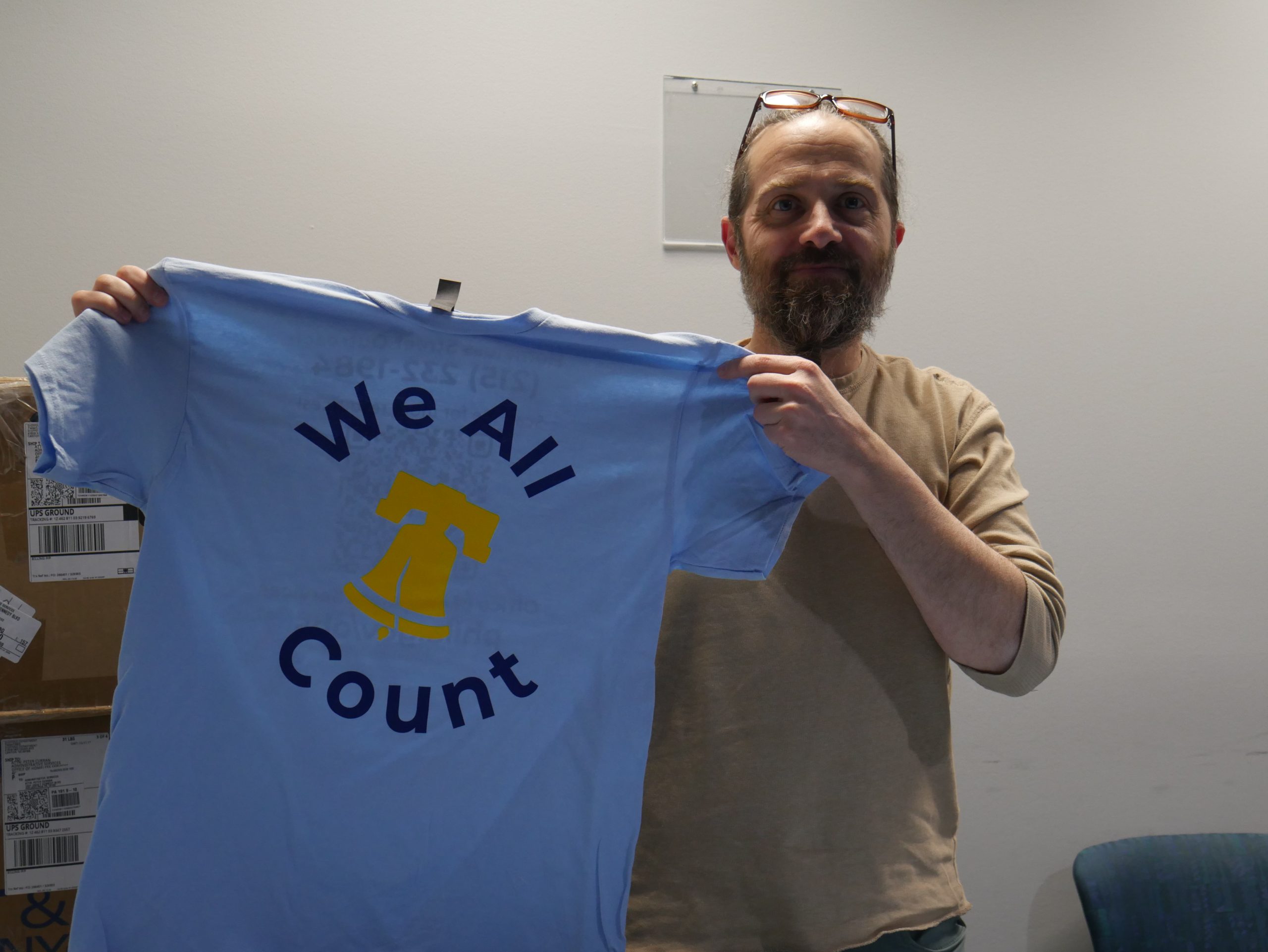
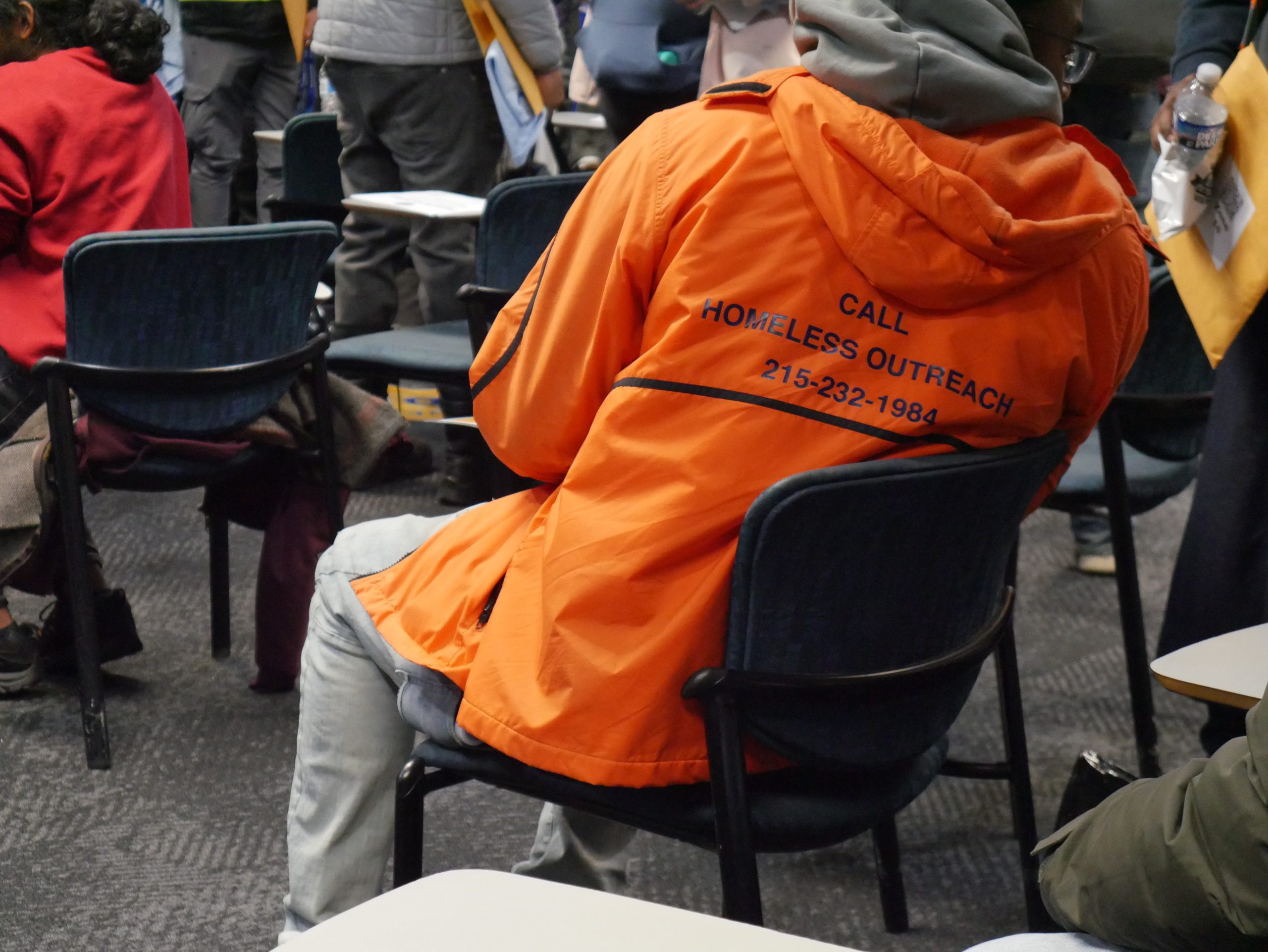
After watching the OHS training videos, I felt prepared for the experience ahead. I arrived around 9 p.m. at the Municipal Services Building to check in and meet my group. The process was very well organized. Walking into a room filled with volunteers, many wearing blue shirts displaying this year’s “We All Count” PIT Count theme on the front and the Homeless Street Outreach Hotline number, (215) 232-1984 on the back, I immediately felt the collective energy and shared sense of purpose. Once I found my group, we reviewed our materials, decided who would drive, and discussed a plan to cover our assigned area as thoroughly and efficiently as possible.
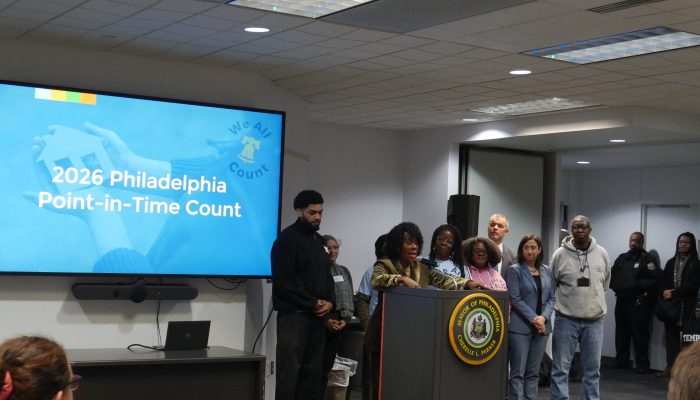
At 10 p.m., OHS Executive Director Cheryl Hill welcomed us, delivering a passionate thanking volunteers and emphasizing the importance of the work. She led us in a call-and-response: “Why do we do this work?” The room answered in unison, “We all count!”
Managing Director of the City of Philadelphia Adam K. Thiel echoed Hill’s and introduced Mayor Cherelle L. Parker. Mayor Parker praised OHS’s and the volunteers’ efforts and highlighted key individuals leading the City’s work to end street homelessness. She closed with her well known signature, yet equally powerful mantra: “One Philly, a United City” and “One America, a United Nation.”
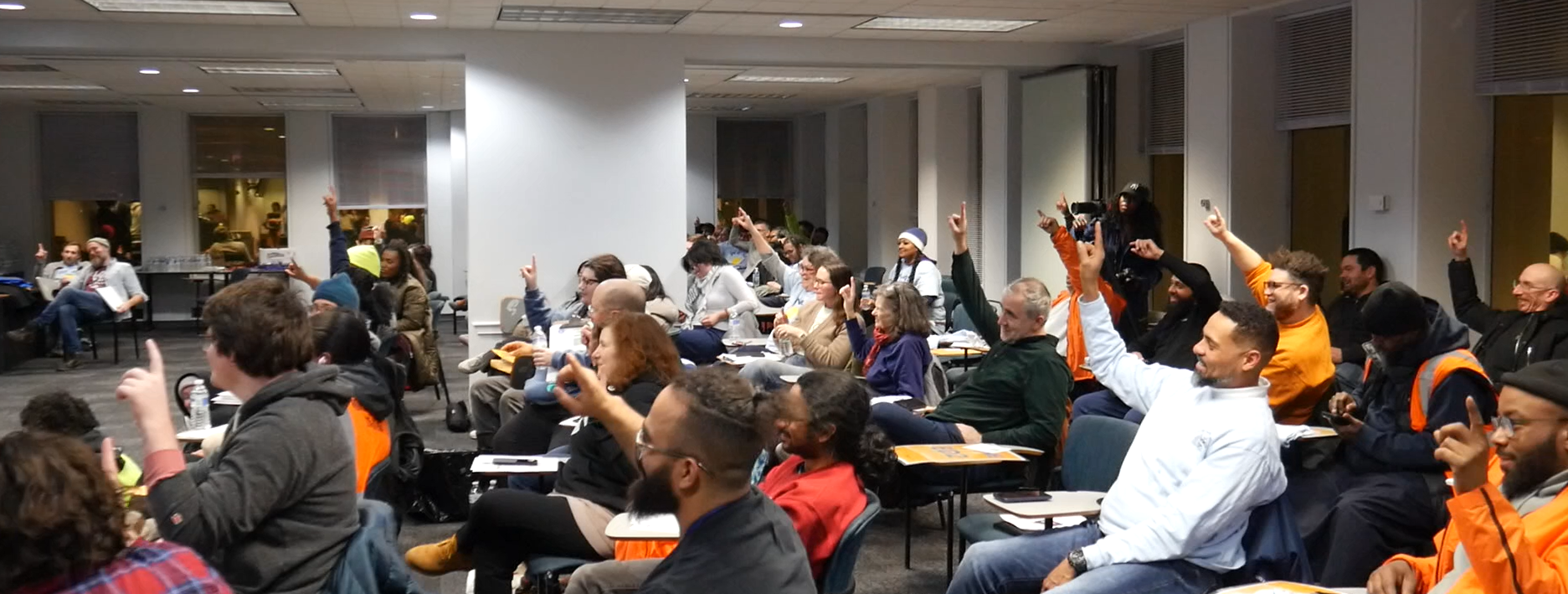
Before we headed out, Najira Ahmed, Continuum of Care Activities and Governance Supervisor for OHS, gave final reminders and released us group by group to begin the count.
On the Ground
My group was fortunate to join an OHS outreach worker who served as our team lead and was familiar with our assigned area. We began by visiting locations where, based on his professional experience, individuals experiencing homelessness were most likely to be staying. When possible and with consent, we spoke with individuals and completed surveys.
After covering those initial sites, we drove block by block through the entire area at a slow pace to ensure we had not overlooked anyone. The work required focus and patience, and we were determined not to leave a single person uncounted. By the time we finished, it was nearly 1:45 a.m. We returned to the Municipal Services Building, submitted our materials, and quietly dispersed into the night. Another volunteer offered to drive me home and, on the drive, back we spoke about our collective feeling of accomplishment and overwhelming gratitude to contribute meaningfully to OHS’s efforts.
Reflection
This experience was deeply emotional and profoundly fulfilling. It reminded me that behind every data point is a person, and behind every policy decision is a community effort. The Office of Homeless Services plays a vital role in ensuring the City’s response to homelessness is informed, coordinated, and grounded in real community needs. Their commitment to data-driven action and meaningful outreach makes this work impactful and necessary. If given the opportunity to participate again, I would do so in a heartbeat.