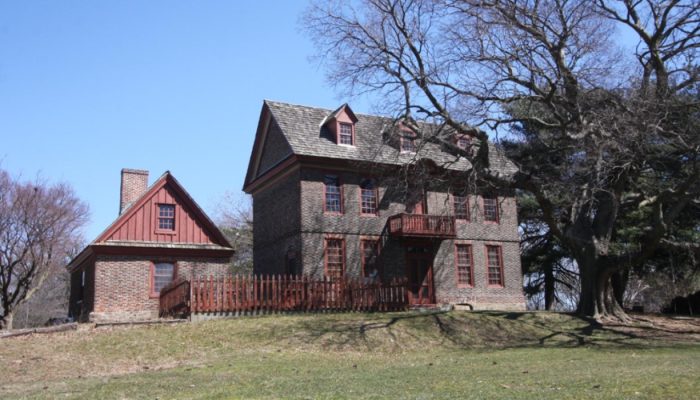
Nestled in FDR Park in South Philadelphia, Bellaire Manor stands as one of the city’s oldest surviving structures. This Georgian-style home is filled with history, architectural elegance, and a unique model for preservation.
Historical Background
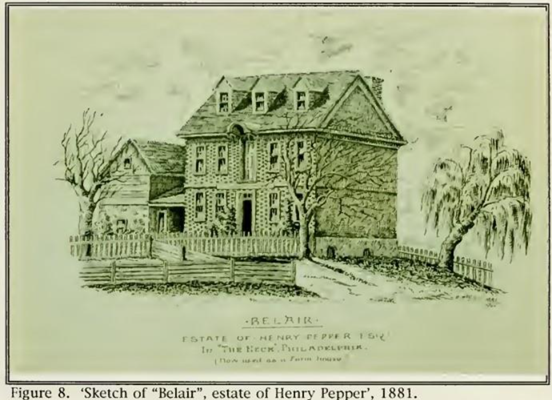
Built between 1714 and 1729 in the former Passyunk Township, Bellaire Manor was commissioned by Samuel Preston. Preston was an influential Quaker, who served as Philadelphia’s mayor, and provincial treasurer. He was even an executor of William Penn’s will. Historians believe he had the manor house built soon after his purchase of the property in 1714. Bellaire Manor historically overlooked a 142- acre working farm behind the house, with a view of marshlands and the river from the front of the building. Today, this farm and marshland is FDR Park.
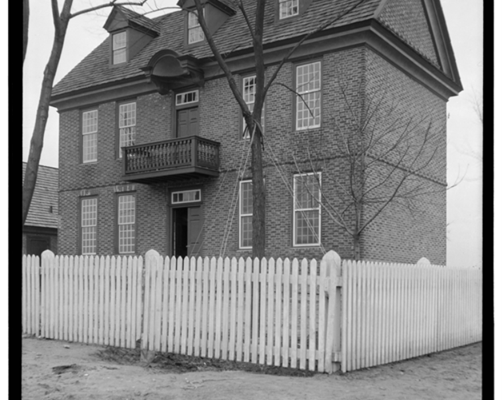
The building’s brickwork, laid out in the Flemish bond pattern with black glazed headers contrasting the red stretchers, is a great example of early Georgian masonry craftsmanship.
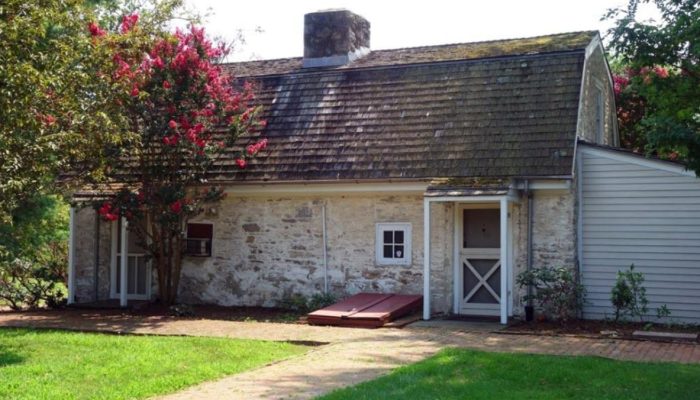
Take note of the smaller, attached building. It is the kitchen or bakehouse. It is actually the oldest part of the house, built as early as 1680., It was the original dwelling that was turned into a kitchen when the manor house was built. Kitchens were often separate structures from the main house so that the house was not damaged in the event of a fire in the kitchen.
A Snapshot in Time
Samuel Preston sold Bellaire Manor and its 142 acres in 1735 to Alexander Woodrop, a merchant and business associate in Colebrookdale Furnace. When Woodrop passed away in 1742, a list of his possessions with their values was created. An inventory titled “At his Plantation in Passyunck Township” provides historians with a snapshot the farm in 1742. Three men (London, Tom, and Titus), two boys (Sam and Cato), and two girls named Phillis and Grace were enslaved at Bellaire Manor as noted in the property inventory.
The inventory includes a separate list of farm animals showing how the land was being used: four bulls, four steers, sixteen cows, two heifers, six horses (two of which are noted as being very old), four mares, sixty-four sheep, twenty-seven turkeys, seventeen hogs, ten pigs, six ducks, seventeen fowls, and finally, three pair of pigeons.
A Unique Model for Preservation
George Pepper purchased the property in 1842. He was a prominent Philadelphia real estate developer, and his family owned Bellair Manor until 1929, when it was sold to the City for one dollar. The house was restored around 1935 and again for the Bicentennial celebration in 1976. Bellaire Manor was added to the Philadelphia Register of Historic Places in 1956. The house does not operate as a museum—it has typically been maintained through a caretaker residency program overseen by the City and Fairmount Park Conservancy. Caretakers reside in the home and perform upkeep duties, helping to protect these historic structures. Bellaire Manor now sits amid the urban parkland of FDR Park—an architectural marker of Philadelphia’s growth over centuries.