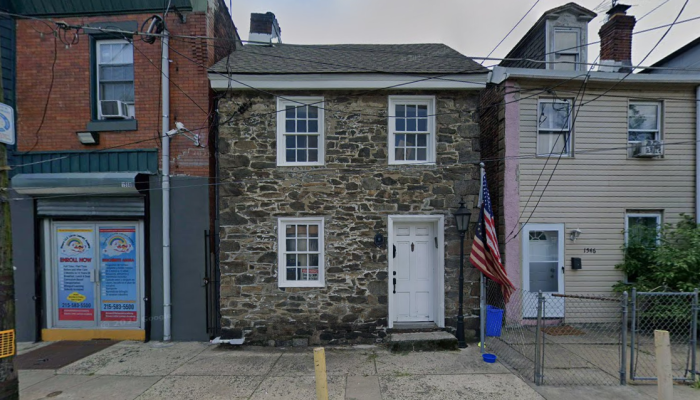
The Leech House (1548 Adams Ave), also known as the Worrell-Winter House or Wilmerton House, is the oldest home in the Frankford area and among the oldest residences in Philadelphia. It was built between1713 and 1728 for shoemaker Paul Wilmerton. This house’s history is a rare reminder of early settlement in Frankford, when it was a rural village and one of the earliest communities that is now part of Philadelphia.
Frankford: A Rural Village Turned Industrial Hub
Founded in 1682, Frankford began as a rural farming village. In 1683, a grand jury ordered the construction of a bridge over Frankford Creek and the laying of King’s Road. King’s Road, laid along an existing Lenni Lenape Trail, is known as Frankford Avenue today. This road connected the Frankford community to Philadelphia and surrounding areas, prompting development and growth of the community.
Many of the goods transported on the King’s Road were produced along Frankford Creek. The creek, and its convergence with the Delaware River, played a crucial role in Frankford’s industrial development. Industry in the area can be traced all the way back to 1660 with the creation of a gristmill by Swedish settlers, long before Frankford was established. Industry increased dramatically in the late 1600s with industrial sites clustering along the creek. These sits included a brick kiln, glass works, sawmill, and tanneries. These were dirty industries not permitted within Philadelphia, but they spurred economic development at an environmental cost.
The Leech House is located between Frankford Avenue and Frankford Creek, two important drivers of the community’s growth. It was built when the community was still rural, but becoming increasingly industrial. The relatively modest two-story detached Colonial house is a reminder of Frankford’s rural past, now nestled into a fully urban landscape. The stones that give the house its unique appearance were pulled from the bed of Frankford Creek. The use of local stone, rather than brick, reflects a rural tradition of settlers building with material found on their properties. The house’s multiple names refer to a few of the early residents who called it home: shoemaker Paul Wilmerton, malt brewer John Worrell, yeoman George Winter, and Isaac Leech, a tanner, farmer, and influential community figure.
A Local Landmark with National Significance
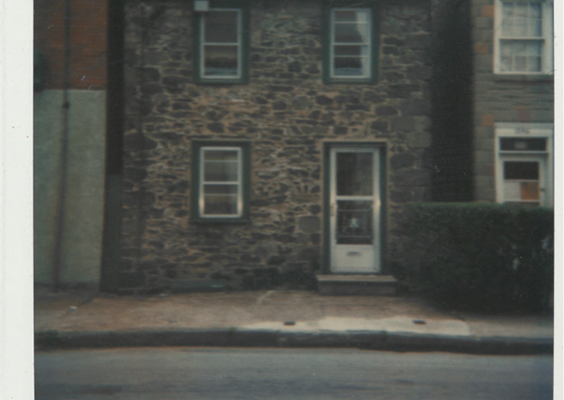
Some historians believe that Thomas Jefferson read the Declaration of Independence aloud here on July 4, 1776, before sharing it publicly. This claim is disputed by researchers who argue that present-day Womrath Park, steps away from the Leech House, is actually the site of Jefferson’s early reading. Both sides of the story illustrate Frankford’s significance in the period around the nation’s founding.
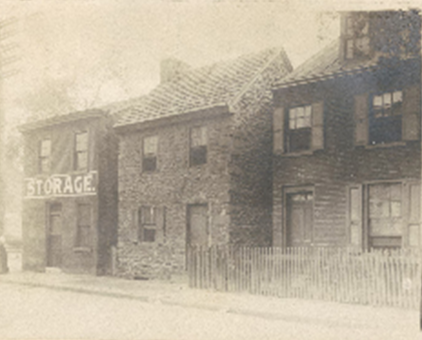
With the exception of a brief stint as an oyster house in the late 1800s, the Leech House remained a private residence throughout its long history. It has survived many waves of urban change and weathered demolition threats, including a proposed expansion of Adams Avenue in the early 1900s. Local preservationists ensured that its story continues today, as a private home and beacon of Frankford’s proud history. The property was added to the Philadelphia Register of Historic Places in 2013.