Are you using your child’s car seat correctly? Children are our most precious cargo, but keeping kids safe during car rides is not always straight-forward. Child Passenger Safety Week is a great time to learn how to protect children through age- and size- appropriate car seats, booster seats and seat belts.
Nationally, car crashes are a leading cause of death for children 0-14 years old. The National Highway Traffic Safety Administration (NHTSA) estimates that car seats reduce the risk of fatal injury by 71% for infants and by 54% for toddlers 1 to 4 years old in passenger cars. No matter how long or short the trip is, everyone needs to buckle up.
Why do car seats work?
Through brief educational car seat videos, researchers at the Children’s Hospital of Philadelphia (CHOP) demonstrate the physics behind a crash and how car seats mitigate injury. Check out these videos to learn about how important proper installation, harness placement, and car seat type are.
Select the right seat
Consider a child’s age, weight, height and developmental level when picking the right car seat, booster seat or seat belt. Seats must fit the vehicle as well as the child.
- Use this tool to find what the best seat for your child is.
- Use this tool to check for recalls of car seats.
Check that car seat
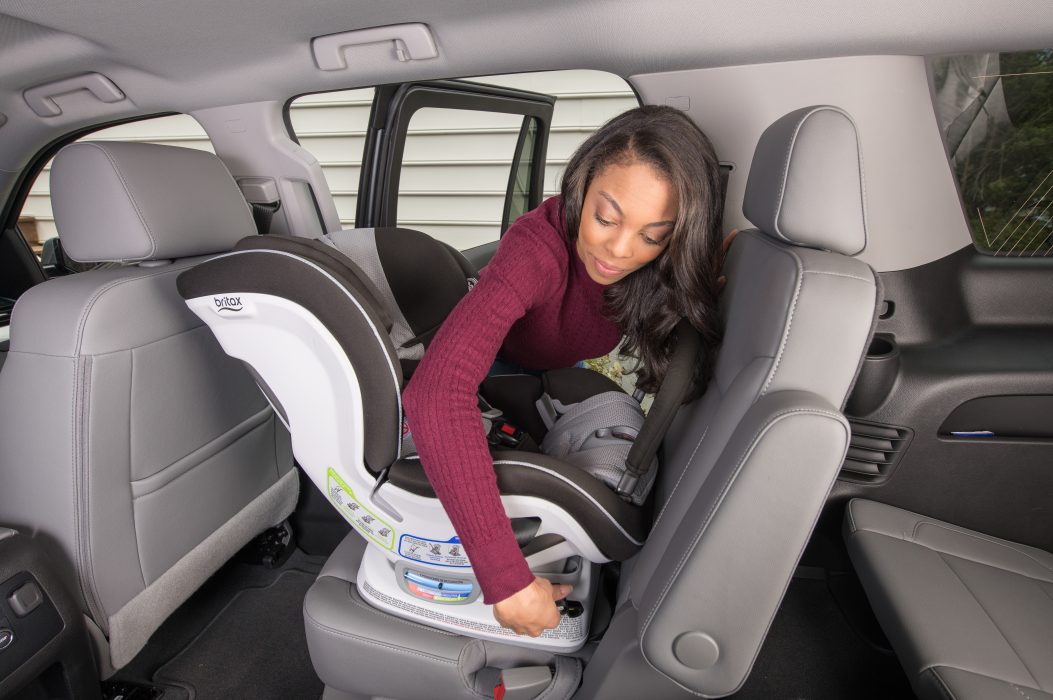
Selecting the right seat is just the first step. Most parents are confident they correctly installed their child’s car seat, but 46% of the time the seat has not been installed correctly, according to NHTSA. Refer to the seat’s installation instructions and the vehicles owner’s manual to make sure the seat is safely installed. For forward-facing car seats, always use tethers.
You are not alone, get checked by a pro!
The Children’s Hospital of Philadelphia is partnering with Safe Kids Buckle Up Program and Safe Kids Southeastern PA Coalition to offer virtual car seat checks, where safety checks are performed through video call. Schedule an appointment.
Christopher’s Hospital for Children offers car seat education and car seat checks through the PATIPP (PA Traffic Injury Prevention Program). The program is primarily available to St. Christopher’s patients and their families. Please contact Almi-Linette.Santiago@towerhealth.org to learn more or schedule a car seat check.
When it’s time, graduate from a car seat to a booster seat
For older children, booster seats are an intermediate step between car seats and seat belts. They are designed to help ensure seat belts fit. When buckled up, a child’s seat belt should lie across the hips, be snug over the chest and shoulders, and touch the upper thighs. Seat belts should not rest on the stomach area or across the neck or face.
Back seat is the best seat
Children under 13-years-old and under 4’9” should always ride buckled up in the back seat.
Be a role model and buckle up!
Adults should always buckle up, too. NTSHA found that the likelihood a child is bucked drops by 40% when parents ride without their seat belts.
Know the law
Pennsylvania’s Occupant Protection Law for Children makes all drivers responsible for appropriately securing children during car trips. All children under four-years-old must be secured in a car seat anywhere in the vehicle and children under two-years-old must be secured in rear facing seats until they outgrow the safety device’s maximum height and weight. Children between four- and eight-years-old must be secured anywhere in the car using a seatbelt and an appropriate booster seat. Children over eight-years-old and under 18-years-old must use a seatbelt to buckle up.