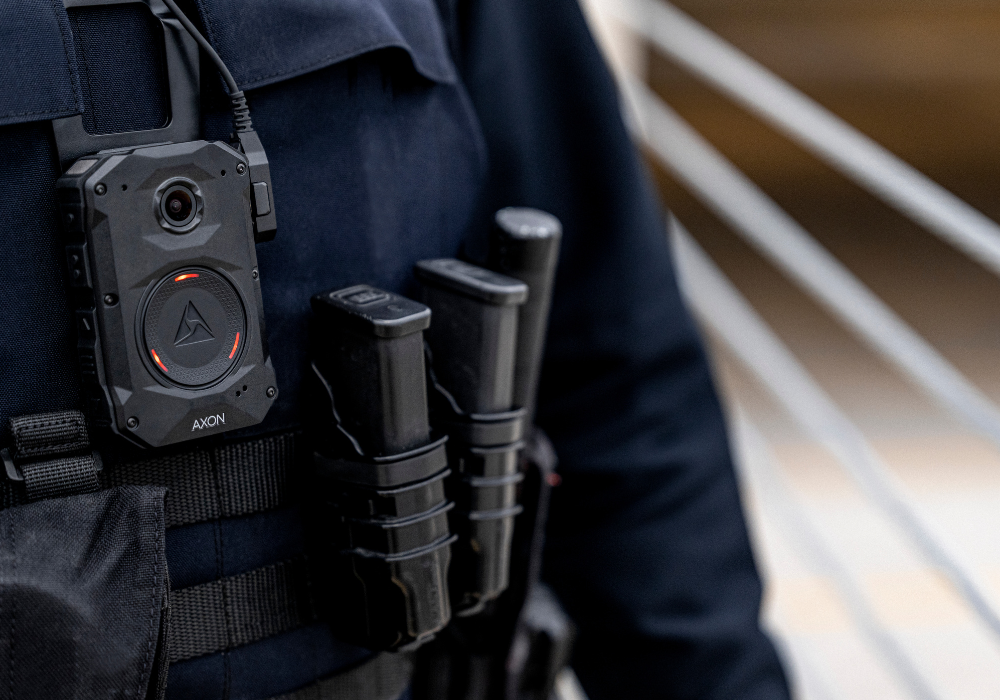
Body-Worn Cameras (BWCs) are tools police officers wear to record sound and video of interactions with the public. BWCs help police and the community keep records of what happened. Most Philadelphia police officers must wear their BWCs while working. Some units don’t wear regular uniforms and some of these officers don’t have to wear body cameras while they work.
How do body-worn cameras work?
When an officer starts their shift, they get their assigned BWC device and turn it on. Once it’s turned on, standby mode starts. Standby mode means the camera is ready to record but does not save sound and video until the officer turns on the recording feature. A green light at the top of the device means that the camera is in standby mode and is ready to record. An officer will double-tap the big center button on the camera to start the recording. The lights on the camera will change from green to red.
Where do the recordings go?
When an officer records an interaction with their BWC, a video is saved to a database. The saved video will have the start and end, and 60 seconds before the recording button was pressed.
- The 60 seconds before the recording button is pressed is called the buffering period.
- The buffering period does not include audio.
How can the public access BWC footage?
To receive a copy of recordings from a police interaction, the requester must complete a Right To Know Request Form within 60 days of the recording. Once completed, submit the form either in person or by mail to the Philadelphia Police Department’s Open Records Office. There is a fee associated with the request.
- Lieutenant Barry Jacobs
Philadelphia Police Department
Open Records/Right to Know Section
400 N. Broad St., 4W-72
Philadelphia, PA 19130 - The fee is $125.00 per recording provided, plus $200.00 hourly labor costs (beyond the first hour).
Please note that PPD may not allow the request if the recording contains:
- Possible evidence in a criminal case
- Information relating to an investigation or criminal charges
- Confidential information or victim information
- Requested videos may be partially blurred. If blurring still can’t hide confidential info, the request may be denied.
If your request is not approved, you have 30 days from the day it was denied to ask a local court to take another look.