Electric vehicles (EVs) are a growing part of the City of Philadelphia’s fleet. After 2030, the City aims to purchase only clean and electric light- and medium-duty vehicles. To support this shift, the City needs reliable and efficient charging stations. Through capital funding and collaboration with other departments, the Office of Sustainability (OOS) is investing in electric vehicle charging projects that will keep the City on the road toward a clean energy future.
The EV charging pilot project
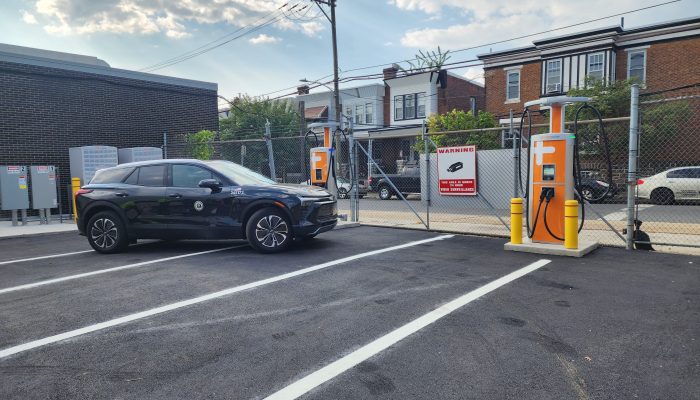
In 2024, the City installed two new DC fast chargers – also known as Level III chargers – at Fleet Shop 258. While standard Level II chargers can take several hours to fully charge a vehicle, DC fast chargers can bring a vehicle’s battery to more than 80% in as little as 20 minutes. With faster charging and less downtime, City staff can quickly get back on the road to continue serving residents.
This also serves as a pilot project to better understand EV charging site design and power requirements, and to build coordination across departments. These lessons will inform future projects as the City continues to expand its EV fleet and charging network.
The project was funded by OOS, the Department of Fleet Services (Fleet), and the City’s Operations Transformation Fund (OTF), and was completed in partnership with the Office of Innovation and Technology (OIT) and the Office of the Chief Administrative Office (CAO). This collaboration will help modernize City-owned facilities and reduce emissions from City operations.
Bringing EV charging to more City facilities
From 2024 to 2025, OOS supported the installation of nine new Level II chargers at the One Parkway Building and the Justice Juanita Kidd Stout Center for Criminal Justice. The new chargers provide reliable, everyday charging for City vehicles at these locations. These chargers are “smart” and can connect to the internet, so staff can monitor usage and track performance. While Level II chargers are slower than DC fast chargers, they are well suited for vehicles that stay parked for longer periods of time.
Looking ahead
OOS is working with the Department of Public Property (DPP) to develop a fast-charging hub in Center City. This project will help fill a gap in charging access in a high-demand area and support the City’s growing electric fleet.
Together, the capital-funded charging projects demonstrate the City’s commitment to sustainability, innovation, and efficient public service. By investing in EV infrastructure today, OOS is taking action to reduce greenhouse gas emissions; improve air quality; support local job growth; and lower long-term operating costs. We will build a strong foundation for a future with cleaner, more resilient transportation.
The Clean Energy Investments blog series highlights recent projects supported by the Office of Sustainability’s Division of Energy and Climate Solutions (DECS). DECS leads projects that improve energy efficiency and resilience in City-owned buildings. The projects are funded through direct capital investments, including the Energy Infrastructure and Efficiency Fund (EIEF), and large-scale energy performance contracting.