A look at Mayor Parker’s proposed FY27 revenue measures and how they would support our kids, safer streets, stronger neighborhoods, and a more competitive Philadelphia.
These proposals are designed to fund the services and infrastructure residents can see, touch, and feel.
Jump to:
- At a glance
- What this could mean for Philadelphia
- How these proposals move Philadelphia forward
- Timeline
- Common questions
At a glance
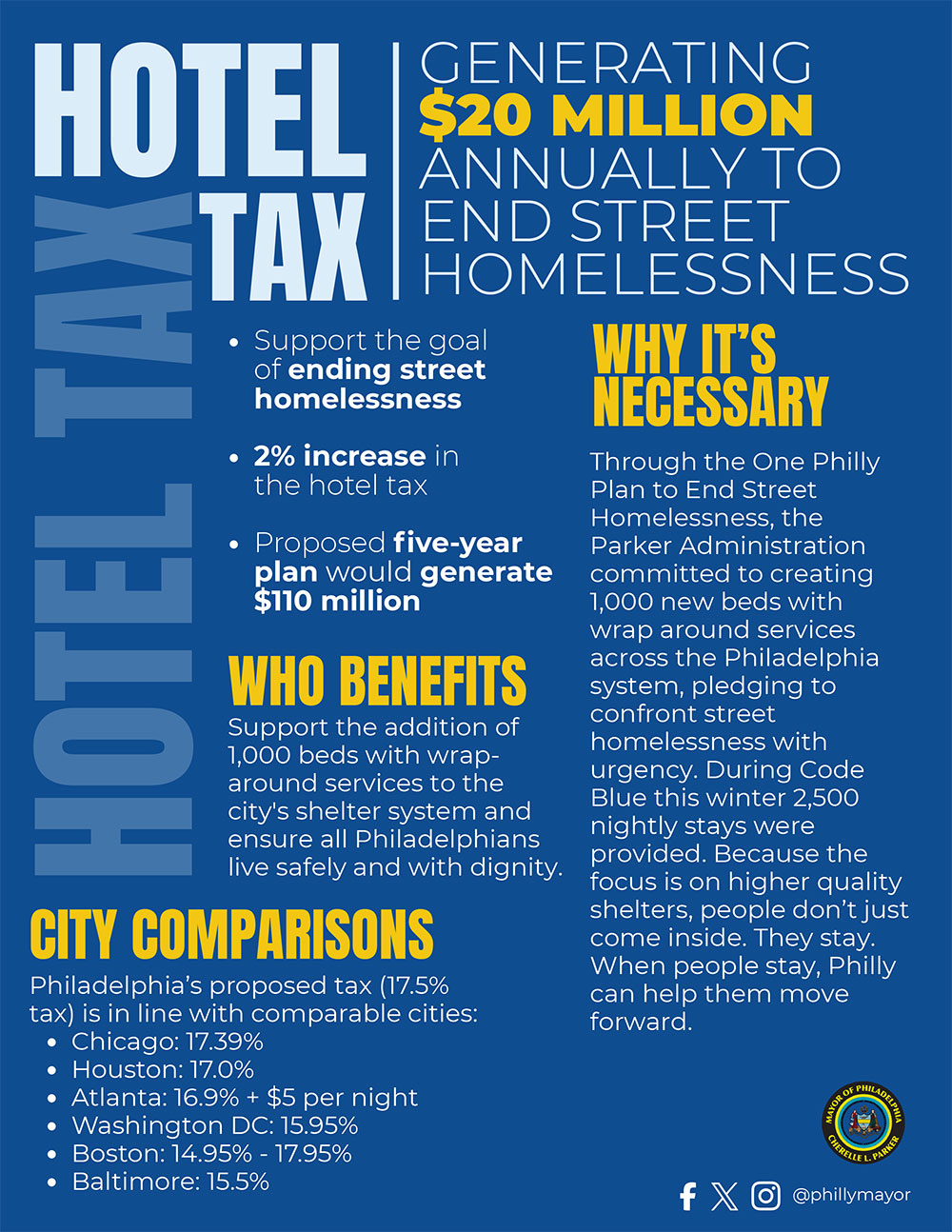
Hotel Tax
Supports efforts to end street homelessness through expanded shelter and wraparound services.
Delivery Tax
Helps establish pothole squads as part of funding road repairs and street maintenance as delivery activity continues to grow.
Sales & Use Tax Loophole
Levels the playing field by requiring remote sellers to follow the same rules as Philadelphia businesses.
Rideshare Tax
Generates funding to support Philadelphia public schools and protect 240 critical school-based positions.
Cell Tower Tax (Use & Occupancy Adjustment)
Updates how telecom infrastructure is taxed to generate additional funding for public schools.
What this could mean for Philadelphia
- More people connected to shelter and care.
- Better-maintained streets and faster repairs.
- Fairer rules for local businesses.
- Stronger neighborhood corridors.
- More stable, well-supported public schools for nearly 200,000 students.
- Saving 240 jobs in school.
How these proposals move Philadelphia forward
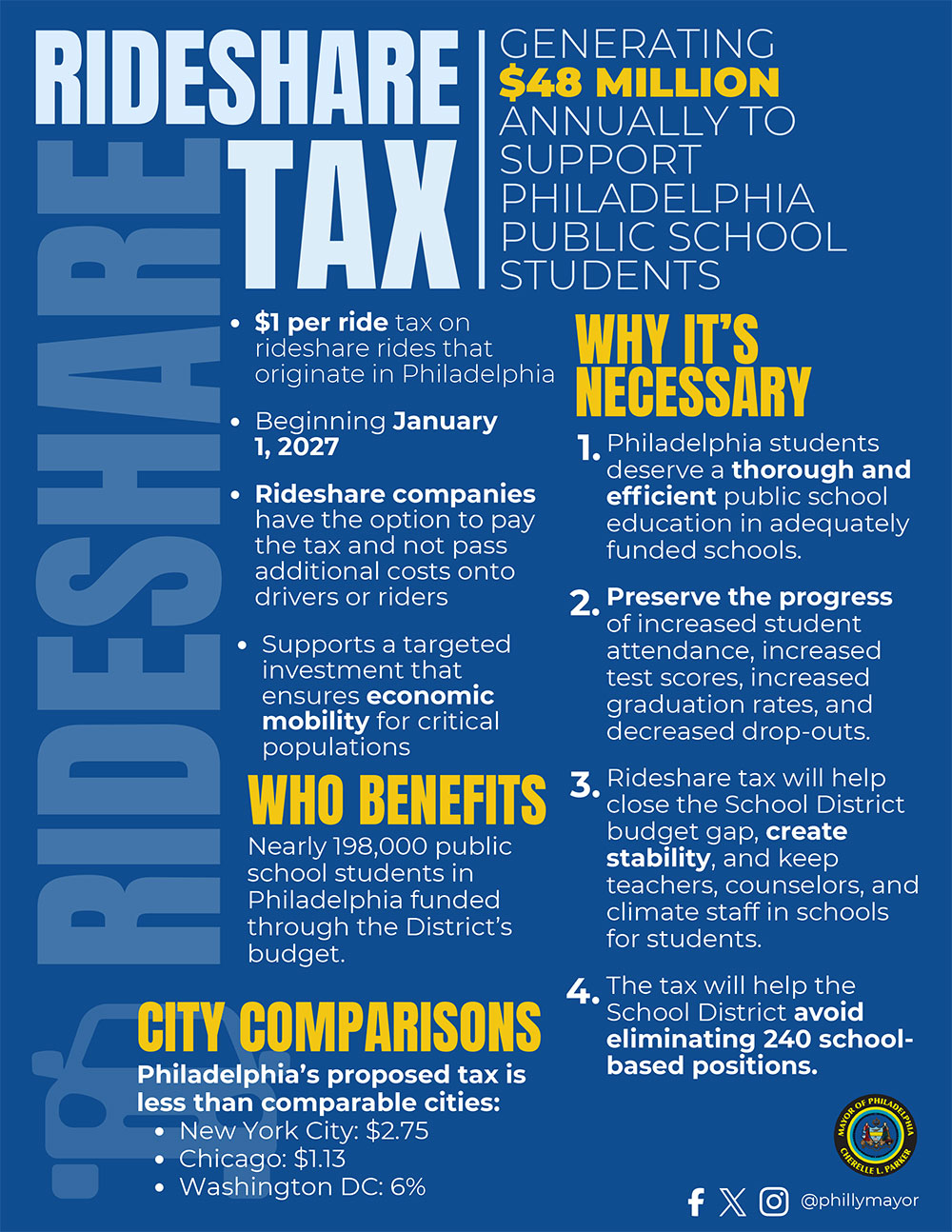
Rideshare Tax to support public schools by saving 240 jobs
What is it?
A proposed $1 per ride tax on rideshare trips originating in Philadelphia, beginning January 1, 2027.
What would it support?
- Funding for the School District of Philadelphia.
- Retention of teachers, counselors, and climate staff.
- Stability in school budgets.
Why now?
Sustaining progress in student outcomes—including attendance, test scores, and graduation rates—requires reliable, dedicated funding.
What people should know
This proposal is expected to generate approximately $48 million annually to support nearly 198,000 public school students.
Download the Rideshare Tax fact sheet (PDF)
Hotel Tax to end street homelessness
What is it?
A proposed increase in the hotel tax to create dedicated funding to help end street homelessness.
What would it support?
- 1,000 additional shelter beds.
- Wraparound services (health, housing, workforce support).
- Expanded outreach and Code Blue operations.
Why now?
Philadelphia needs sustained, dedicated funding to address visible street homelessness with care and urgency.
What people should know
This proposal is designed to deliver a humane, results-driven approach that benefits residents, businesses, particularly industry, and visitors.
Download the Hotel Tax fact sheet (PDF)
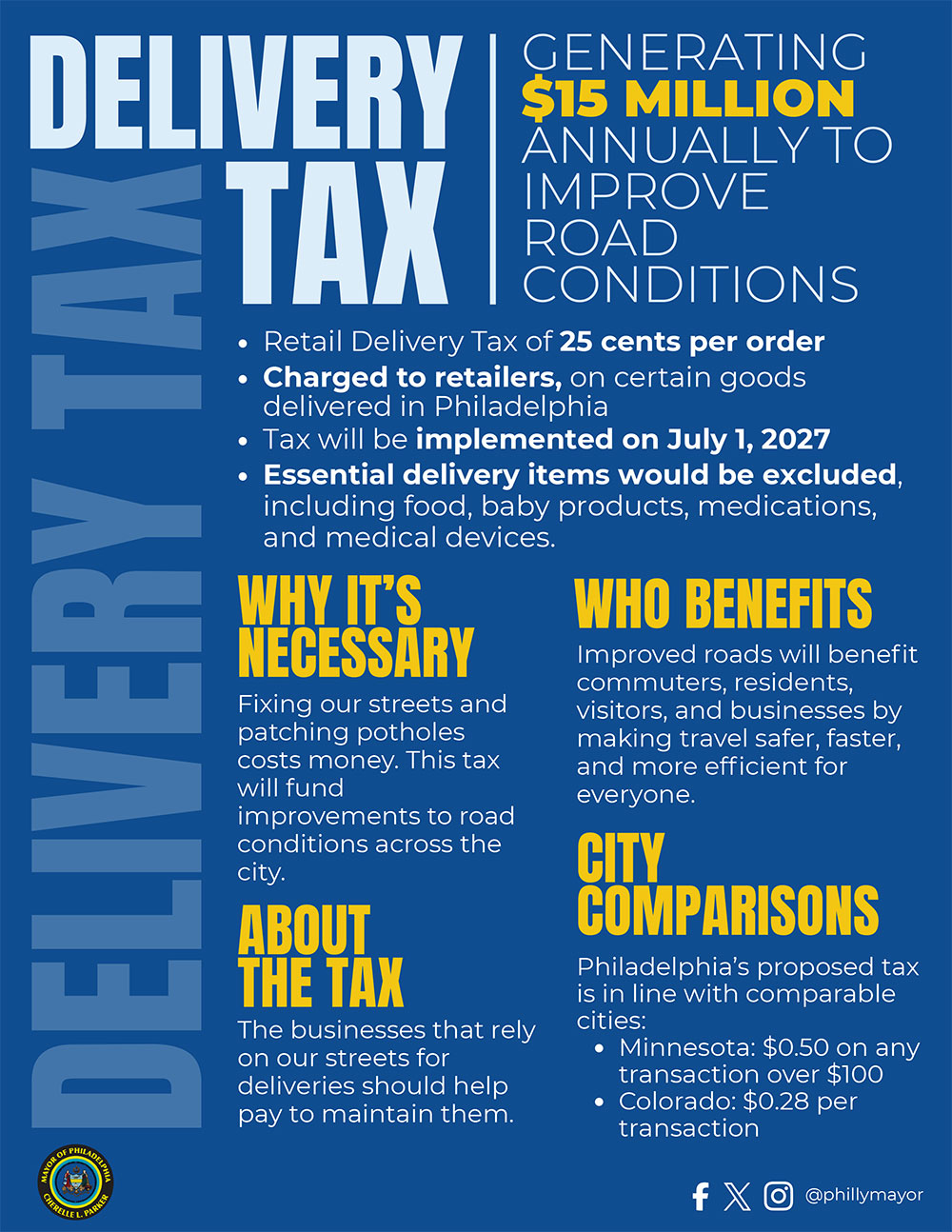
Delivery Tax to support road repairs
What is it?
A proposed 25-cent per delivery fee on certain goods delivered in Philadelphia, beginning July 1, 2027.
What would it support?
- Pothole repair and street resurfacing.
- Improved road conditions citywide.
- Safer, more efficient travel.
Why now?
Increased delivery activity is contributing to wear and tear on city streets, requiring dedicated funding for maintenance.
What people should know
Essential goods—including food, baby products, medications, and medical devices—would be exempt.
Download the Delivery Tax fact sheet (PDF)
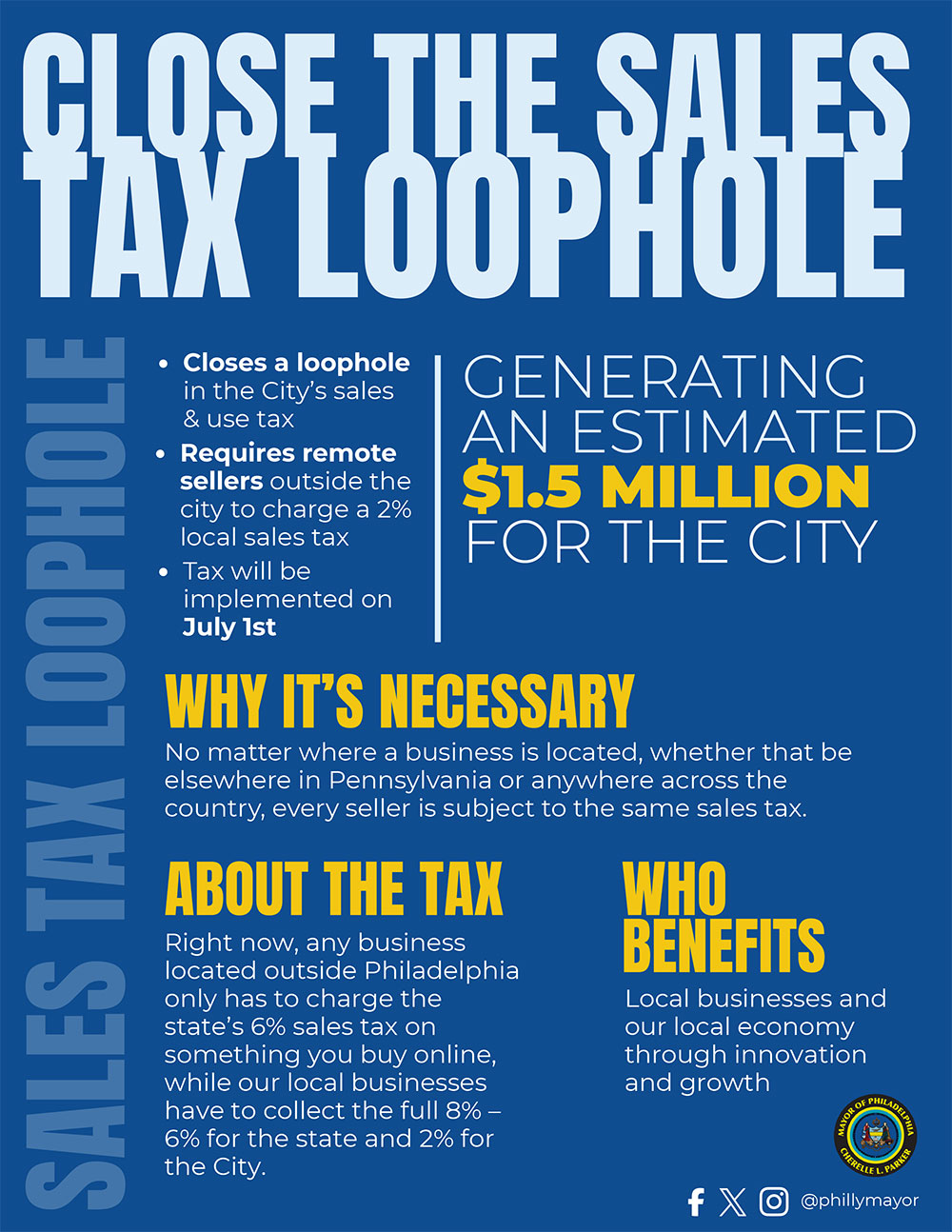
Sales & Use Tax Loophole closure to make business fair
What is it?
A proposal to ensure remote sellers collect the same local sales tax as Philadelphia businesses.
What would it support?
- Fair competition for local businesses.
- Stronger neighborhood commercial corridors.
- Local economic growth.
Why now?
Local businesses are currently at a disadvantage due to inconsistent tax collection.
What people should know
This does not create a new tax—it ensures existing rules are applied fairly.
Download the Sales & Use Tax Loophole fact sheet (PDF)
Cell Tower Tax (Use & Occupancy Adjustment)
What is it?
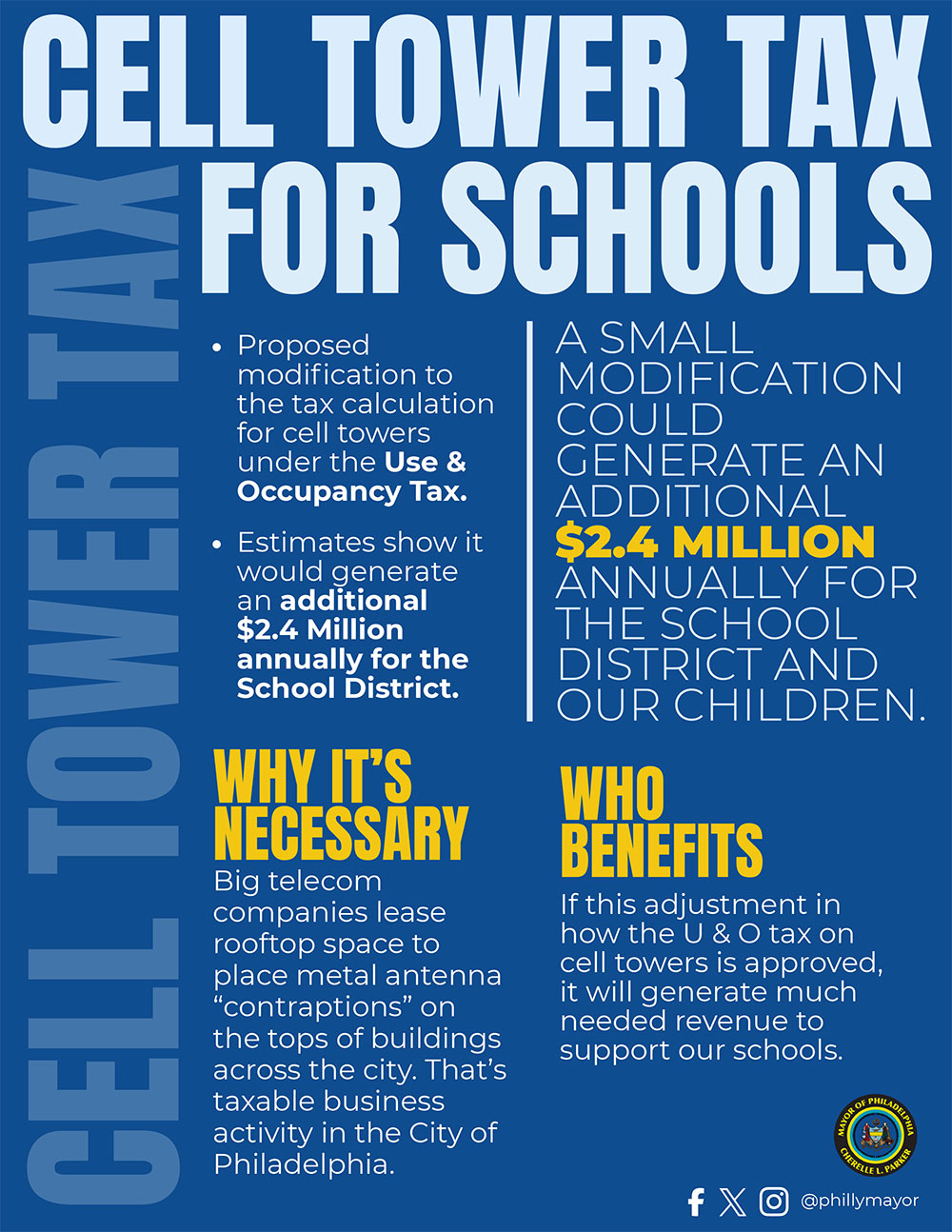
A proposed modification to how cell tower installations are taxed under the Use & Occupancy Tax.
What would it support?
- Additional funding for the School District.
- Continued investment in education.
Why now?
Telecom companies utilize space across the city for infrastructure that qualifies as taxable business activity. Adjusting the calculation ensures appropriate contribution and that cell towers are taxed the same way as other properties.
What people should know
This adjustment is expected to generate approximately $2.4 million annually for public schools.
Download the Cell Tower U&O Tax fact sheet (PDF)
Timeline
- March 12 — FY27 Proposed Budget delivered to City Council
- April 21 — Tax proposal hearings
- April–May — Budget hearings continue
- June — Final budget adoption deadline
Common questions
Is this a new tax?
Some proposals close gaps or apply existing rules more fairly. Others are targeted investments tied to specific outcomes, including new taxes that ensure that companies that are using City services help pay for those services.
Will essential goods be affected by the delivery tax?
No. Items such as food, baby products, medications, and medical devices are exempt.
Why use the hotel tax for homelessness?
It provides dedicated funding to address a specific and urgent need and will provide a particular benefit to the hospitality industry.
How does the rideshare tax compare to other cities?
Philadelphia’s proposed $1 per ride is lower than comparable cities, like New York and Chicago.
When will City Council consider these proposals?
Hearings on the tax measures begin April 21.