The Philadelphia City Archives proudly presents an exhibit honoring influential and pioneering Black educators and institutions whose leadership transformed education in Philadelphia. Their courage, scholarship, and advocacy opened doors for generations of students and reshaped the city’s educational landscape.
From groundbreaking superintendents to early civil rights advocates and institutions that nurtured brilliance against the odds, this exhibit highlights the enduring legacy of those who believed deeply in the power of education.
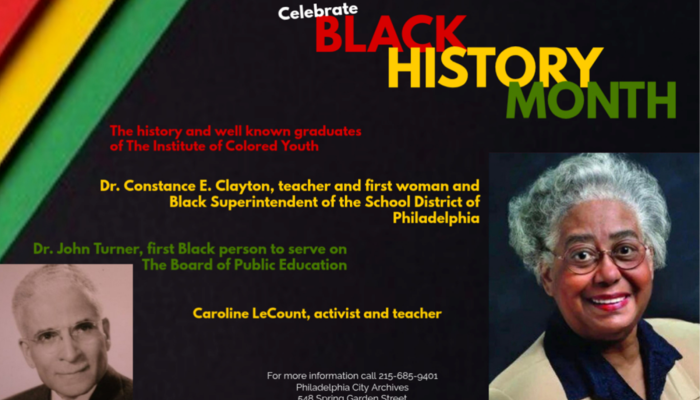
Dr. Constance “Connie” E. Clayton
Dr. Constance “Connie” E. Clayton made history as the first woman and the first Black person to serve as superintendent of the School District of Philadelphia. Serving from 1982 to 1993, her tenure was marked by stability, reform, and forward-thinking leadership.
At a time when the district faced financial strain and labor unrest, Dr. Clayton stabilized the budget and helped restore peace after years of strikes. She championed a standardized curriculum to ensure consistency and equity across schools, reinforcing her belief that every child deserved access to a high-quality education. Her leadership not only strengthened the district but also paved the way for future generations of educational leaders.
Caroline LeCount
Long before educational equity became a national conversation, Caroline LeCount was already leading the charge.
In 1863, she graduated at the top of her class from the Institute for Colored Youth (ICY). She became the first Black woman in Philadelphia to pass the teaching examination — a groundbreaking achievement in an era defined by systemic barriers.
LeCount taught at the Ohio Street School, where she later became principal. The school was eventually renamed to honor her fiancé, Octavius Catto, himself a prominent civil rights activist. Beyond the classroom, LeCount was a tireless advocate for desegregation and equal access to public transportation, embodying the powerful connection between education and civil rights.
Dr. John P. Turner
When Dr. John P. Turner arrived in Philadelphia for his medical residency, he could not have known the lasting impact he would have on the city’s educational system.
In 1935, he became the first Black member appointed to The Board of Public Education. During his service, Dr. Turner strongly advocated for early childhood education, recognizing the transformative importance of learning beginning at kindergarten. His leadership reflected a broader commitment to expanding opportunity and strengthening the educational foundation for all students.
Richard R. Wright
A true Renaissance figure, Richard R. Wright was an educator, military officer, politician, banker, and civil rights advocate. In the 1920s, he joined his son in Philadelphia and co-founded a bank that became vital to the local Black community during a time when access to financial institutions was limited.
His commitment to empowerment through education and economic opportunity left a lasting mark. Today, a school on North 28th Street in Strawberry Mansion bears his name — a testament to his enduring influence.
Preserving the Past, Inspiring the Future
This exhibit is more than a look back — it is a reminder of how leadership, perseverance, and advocacy can transform institutions and communities. The stories of these educators continue to inspire current and future generations.
The Philadelphia City Archives invites residents, students, and visitors to explore this powerful exhibit and reflect on the individuals who shaped Philadelphia’s educational legacy.
Their work laid the foundation. Their courage opened the doors. Their legacy lives on.